
When vaginal discharge or pain appears, a test comes to mind, but on a day with no discomfort you may wonder, “Is it all right to go now?” Even after receiving checkup information, you may put it off because you do not know what to book. At times like this, it is a little easier if you sort out what you want to check at this visit, rather than choosing a test name first.
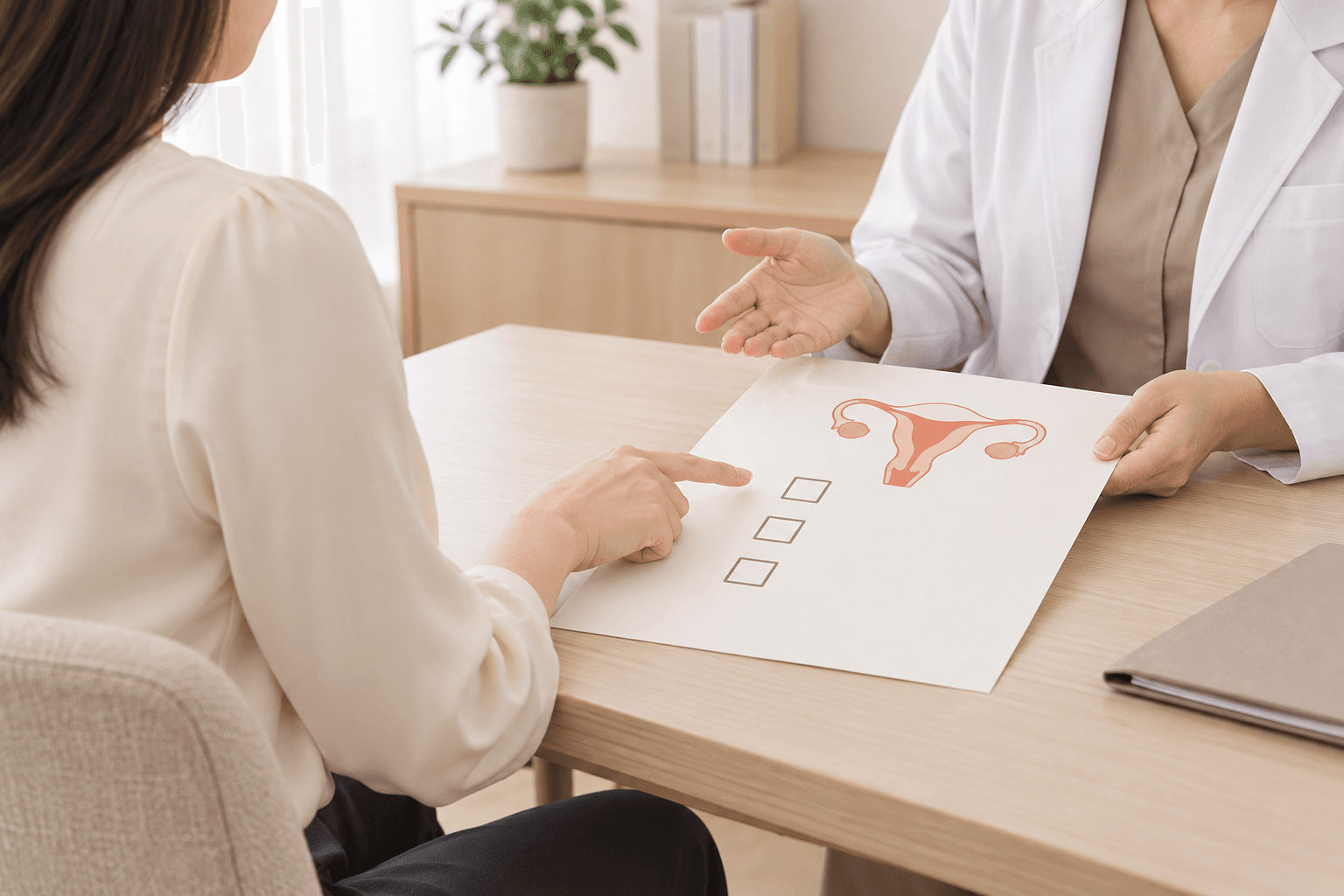
What is checked when nothing hurts?
Preventive screening is done to look for certain diseases or related changes before symptoms appear. Its starting point differs from care that looks for the cause of bleeding or pain.
Cervical cancer screening, for example, is not a test only for people who already have discomfort. A test done because vaginal discharge has changed, or an examination done because of pain, is instead for assessing the problem at hand. Even if you had tests at a visit for symptoms, they may not replace the national screening, depending on which tests were done.
An OB-GYN visit includes counseling as well as tests. If you want to discuss something in advance, such as a method of contraception, vaccination, or plans for pregnancy, you can talk about it then. A pelvic examination is not automatically needed just because you came for counseling, and whether an examination is needed is decided after symptoms, past history, and other factors are reviewed and the explanation has been heard.
When do you receive the national cervical cancer screening?
Korea's National Cancer Screening Program recommends that women aged 20 and older have cervical cytology every 2 years. Check whether you are eligible this year, and which screening facility to use, through Korea's National Health Insurance Service eligibility lookup or your screening notice.
Here, “2 years” is the basic interval for the national screening. If a previous test showed an abnormal finding, or you were told to have a repeat test sooner, follow the follow-up schedule explained at that time. If you have had surgery on the uterus or have never had sexual intercourse, please consult a doctor before the test. Whether screening is needed is not decided by marital status alone.
Cervical cytology is a test that looks at cell changes of the cervix. This one test does not check every disease of the uterus and the ovaries. Even if you received a normal result, new symptoms call for care for those symptoms.
Do you also need ultrasound or other tests?
Additional items are chosen according to age, previous test results, medical history, and current concerns. You do not need to follow exactly a list of tests that someone around you had.
If the checkup information lists several items, ask, “In my case, what does this test check?” For items recommended apart from the national cervical cancer screening, it helps to check their purpose and cost separately as well. Whether to have further tests, including ultrasound, is decided in consultation with the clinician.
Tests have limits. An abnormality may be missed, and even when it is not a disease, an abnormality may be suspected, so a repeat test or further evaluation may follow. A greater number of tests does not in itself guarantee health, so it is important to understand what comes next based on the results.
What should you prepare before counseling?
Bringing recent test results and the health information that applies to you helps with planning the tests. Even if you do not remember the dates exactly, please say what you do know.
- Dates and results of previous tests Bring the result sheet or the notice saved on your phone, and check whether a repeat test was recommended. If you only remember “an OB-GYN test”, please also check whether it was cytology or an ultrasound.
- Recent periods and history of treatment or surgery Please tell us the first day of your last period, whether you have reached menopause, the possibility of pregnancy, and any surgery or treatment related to the uterus.
- One thing you want to ask this time You can begin with what you most want to know, such as screening timing, contraception, or preparing for pregnancy. Concern about the test process, or a past experience of pain, is also something to discuss.
When a cervical sample is collected, you may feel discomfort or pain, and a small amount of bleeding may occur afterward. If it is too hard during the test, do not endure it. Ask to stop. If bleeding after the test is heavy or keeps going, contact the medical facility where you had the test and have it checked.
After the test, also ask when and how you will check the results. Checking the results, and learning the next test's timing and whether any further care is needed, is how the checkup is completed.