
We identify where laxity is present
We assess widening of the vaginal opening and laxity of the inner vaginal wall separately. Postpartum perineal changes, pelvic floor function, and pain are also reviewed.
Naver booking and Kakao chat open in Korean.
Vaginal filler / Vaginal laser
We adjust the width and opening of a lax vagina according to the condition of the tissue.
At a vaginal surgery consultation in Sasang, Busan, please discuss your current symptoms, childbirth and surgical history, and future pregnancy plans.
Vaginoplasty is surgery that adjusts excess vaginal mucosa and sutures supporting tissue as needed to reduce vaginal width. The surgical extent depends on which area is lax—the opening, the inner vagina, or both.
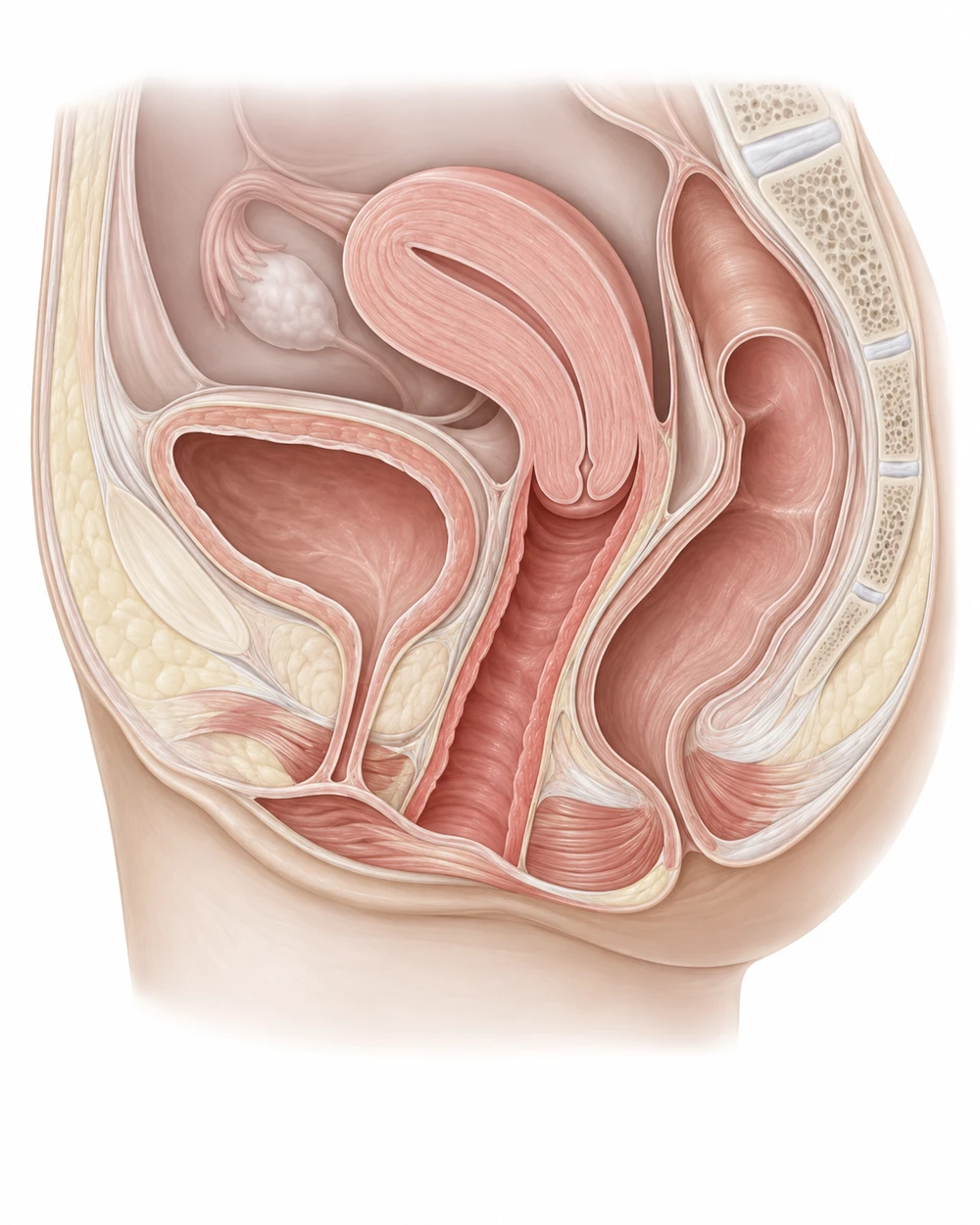
The numbers identify anatomical structures, not treatment sites.
Excess tissue is adjusted, and the necessary tissue is brought together and sutured.
This conceptual diagram explains the mechanism. It does not show the actual treatment site, extent, or product shape.
We assess widening of the vaginal opening and laxity of the inner vaginal wall separately. Postpartum perineal changes, pelvic floor function, and pain are also reviewed.
In general, we consider adjusting excess mucosa and bringing the surrounding support tissue together with sutures. There are also methods that bring tissue together without excision, so the actual technique is decided after examination.
The goal is not simply to make it narrower. We consider which tissue to preserve, the extent of the opening, and the risks of scarring and pain with intercourse, and we monitor progress during recovery.
The goal of surgery is to adjust the width and shape of the area of laxity identified during examination.
We confirm whether the cause of the feeling of laxity matches the planned surgical area. This surgery does not also guarantee better sensation, greater sexual satisfaction, or improvement in urinary incontinence.

If you feel vaginal laxity or discomfort during sex, symptoms and exam findings should be reviewed together. We distinguish dryness, pain, and pelvic floor concerns, and consider whether surgery that adjusts tissue is appropriate.
You can hear an explanation during your visit, review what you need to know, and then decide.
Please tell us what is affecting daily life, such as a sense of looseness, pain, pressure, or urine leakage.
We review any injury or sutures at childbirth, previous vaginal reshaping procedures and injection treatments, and future pregnancy plans.
We distinguish which changes may be possible from symptoms that are hard to resolve. Sexual function and satisfaction cannot be guaranteed by surgery.
If needed, tissue at the vaginal opening or vaginal wall is adjusted. The actual site of excision and how much muscle is involved require explanation based on the examination.
Pelvic floor training or treatment of symptoms may also be needed. We do not present laser or injection procedures as alternatives that produce the same results as surgery.
We compare the change you want with the actual tissue, and you will be told which areas would be operated on and which tissue should be left.
Please share your medications, allergies, and previous surgery history. We will confirm fasting for anesthesia, whether you need someone to accompany you home, and how long you may need to adjust work.
You will receive guidance on how to clean the wound, how to use prescribed medicines, and your next visit. Exercise and sexual activity are resumed after recovery is confirmed.
You will be informed about possible bleeding, infection, scarring, and injury to nearby organs. New changes such as difficulty urinating or having a bowel movement should also be reviewed.
Excessive narrowing or scarring can cause pain during intercourse. The degree of tightness alone is not used as the measure of outcome.
Wound healing is checked in follow-up, and timing for exercise and sexual activity is decided then. If pain or bleeding worsens, contact the surgical facility.
We do not decide that surgery is needed based on childbirth history alone. We also consider current discomfort, tissue and muscle condition, and future pregnancy plans.
'Vaginal procedures' is an umbrella term and does not always mean vaginoplasty. Vaginoplasty adjusts and sutures tissue. Its mechanism differs from fillers and lasers, and its suitability is assessed according to actual symptoms and the condition of tissue and muscles.
Please tell us what is bothering you and your previous examination and treatment history. Together we will confirm the care you need.
LILEAP WOMEN'S CLINIC, Sasang, Busan · Care from a female obstetrics and gynecology specialist
9th floor, M City Building, 200 Sasang-ro, Sasang-gu, Busan
Lileap Women's Clinic is conveniently accessible via Sasang Station on the light rail, Sasang Station on subway Line 2, and Sasang Bus Terminal.
Before your visit, confirm the clinic schedule and any preparation when booking or by phone.
This is general medical information. Individual care plans and what is offered at the clinic are confirmed during consultation.