
We assess skin and volume separately
We distinguish sagging caused by excess skin from bulk caused by excess fat. If hollowing is the main concern, restoring volume is another option.
Naver booking and Kakao chat open in Korean.
Women's Aesthetic Care
Lax skin and excess volume are reduced according to the tissue of the labia majora.
Labia majora surgery reduces outer skin laxity and fat volume as separate issues. How sagging skin is refined, and how excess volume is reduced, depends on the condition of the tissue.
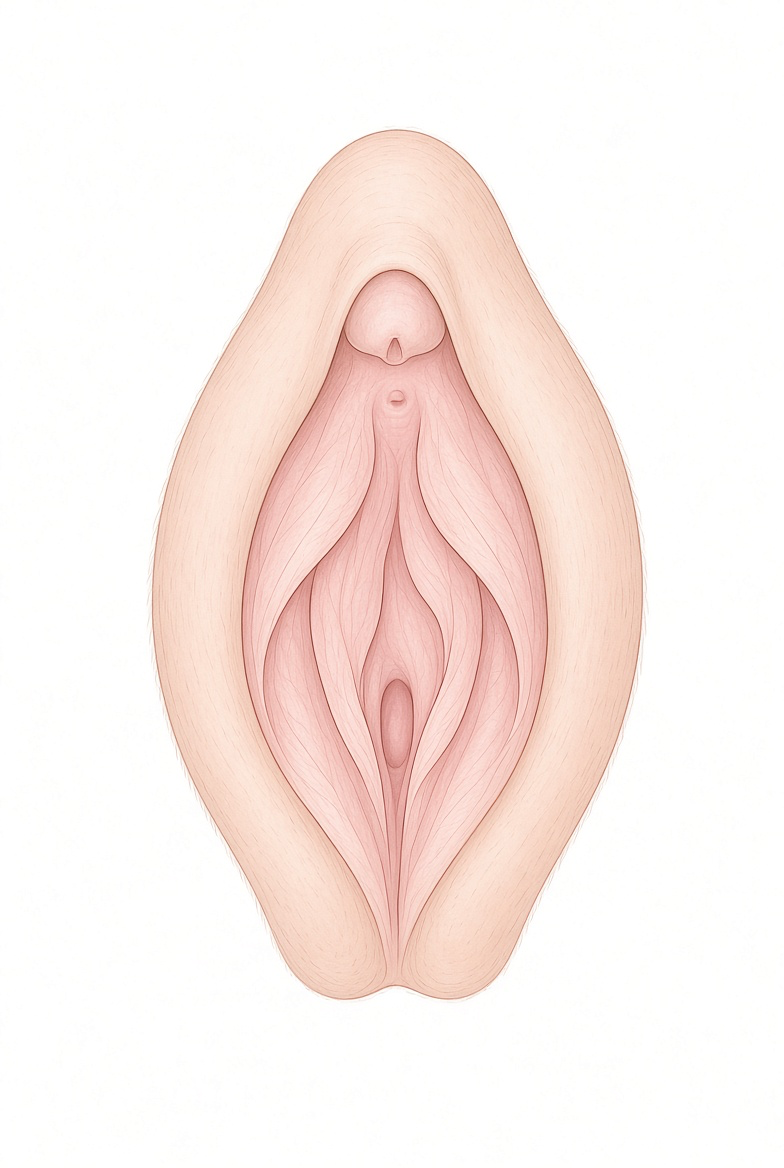
We distinguish sagging caused by excess skin from bulk caused by excess fat. If hollowing is the main concern, restoring volume is another option.
We review options such as excision of excess skin, liposuction, or tissue removal, based on your condition. Not all methods are performed together.
We review incision and suture placement together with how much skin should be left. Asymmetry may remain, and scarring or changes in sensation can occur.
The goal is to adjust excess skin to refine sagging and wrinkled contour.
The goal is to adjust tissue volume to balance the shape. This is distinct from a procedure that fills sunken areas.

The labia majora are the outer skin folds of the vulva. Size and left–right shape vary from person to person. A different appearance alone does not mean treatment is needed; specific discomfort such as friction or sagging, and the change you want, should be reviewed together.
Surgery to reduce volume and procedures to add volume have different purposes. Rather than matching yourself to types in photos, we assess tissue condition by examination.
Please tell us which area rubs when you dress or move, and whether there is pain or skin irritation.
We ask when the change started, and whether you have had previous surgery or injectable procedures.
Please describe specifically which areas you would like reduced and which you would like to keep. We discuss possible changes and differences that may remain.
Even for concerns in the same area, the approach differs if the problem you want to address is different.
This is a way to adjust extra skin or tissue. The extent of removal, suture placement, and where a scar may lie are confirmed together during examination.
Removing too much tissue is difficult to reverse. Sensation and friction should be considered, not only how it looks.
If volume loss is the main concern, a different consultation from reduction surgery is needed. Advantages, disadvantages, and risks also differ depending on the material and method used.
This is not a required step of reduction surgery. Available methods and whether they are needed are confirmed separately.
View labia majora volume consultationManaging the cause of irritation first, or observing the change, can also be options. If another problem that needs treatment is found on examination, that problem is addressed first.
You can hear a full explanation and then decide. Having a consultation does not mean you must proceed with surgery.
We examine the area of discomfort and the condition of the tissue, and you will receive an explanation of the extent of excision or augmentation. If additional procedures are recommended, confirm why each one is needed.
Tell us your medications, allergies, and previous surgeries. Anesthesia, fasting, and how you go home are explained individually according to the planned surgery.
We go over wound care, when to return for follow-up, and whom to contact if a problem arises. Suture care and when to resume activities are also confirmed.
Anesthesia, duration, going home, and suture care vary with the surgical method and your condition. Please confirm preparation and timing in detail when you book.
Left–right differences may remain after surgery. Evidence that vulvar aesthetic surgery improves sexual function or satisfaction is limited, and the change you hoped for may not appear.
Pain, swelling, bleeding, infection, scarring, and changes in sensation may occur, and further treatment may be needed. Follow postoperative instructions on washing and reducing friction.
If pain or bleeding gets worse, or you are worried about the wound, contact the medical facility where you had surgery. Do not touch sutures or change medications on your own.
Left–right difference by itself is not a reason for surgery. Actual discomfort, the condition of the skin and tissue, and the changes and risks of surgery are reviewed together.
It depends on the extent of surgery and how recovery proceeds. Ask separately about work, exercise, and sexual activity, and confirm when to resume at your postoperative visit.
The two methods have different goals and are not always done together. Ask for a separate explanation of the expected changes, risks, and costs if you choose one method versus both.
Please tell us what is bothering you and your previous examination and treatment history. Together we will confirm the care you need.
This is general medical information. Individual care plans and what is offered at the clinic are confirmed during consultation.