
We assess the location of hollowing and the skin
We distinguish volume loss from skin sagging. If there is substantial excess skin, injection alone may not be enough.
Naver booking and Kakao chat open in Korean.
Women's Aesthetic Care
Hollowed labia majora need an approach that supplements insufficient volume.
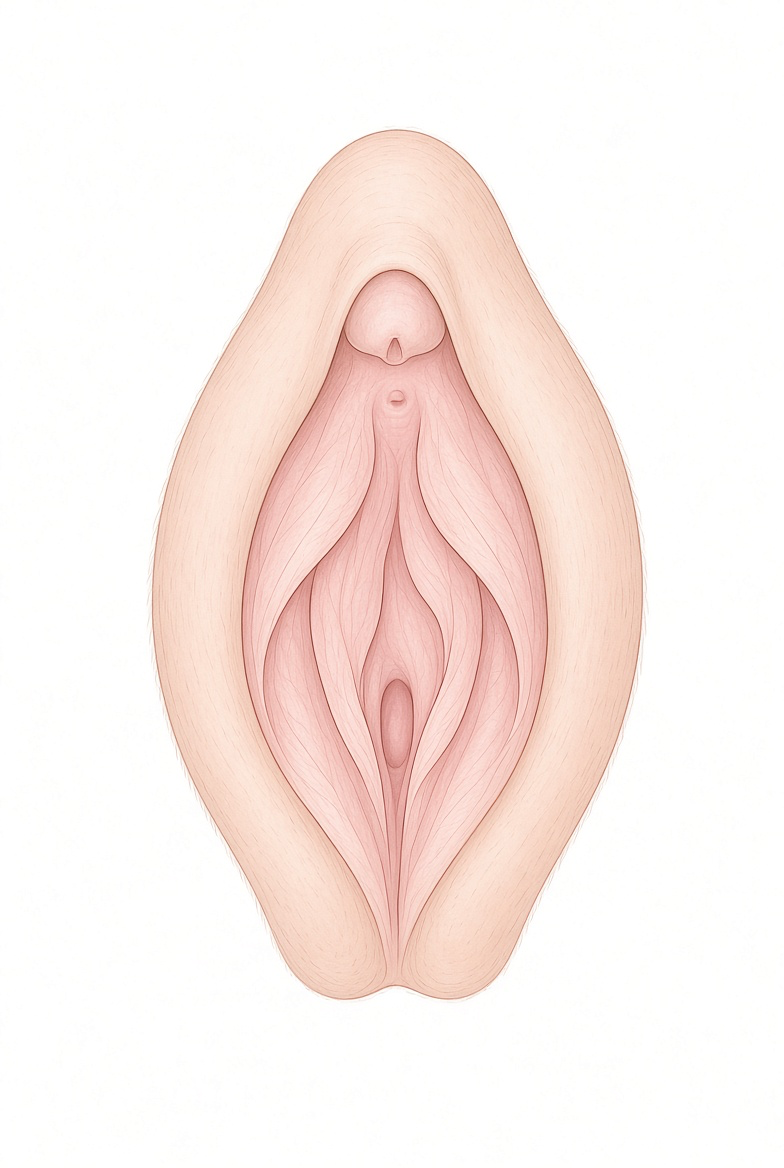
Labia majora volume treatment adds volume to areas that have flattened or thinned. Duration, recovery, and risk differ by material such as filler or fat, so we confirm the actual in-clinic method.
We distinguish volume loss from skin sagging. If there is substantial excess skin, injection alone may not be enough.
Fillers and fat grafting are different methods. We confirm the in-clinic material, injection sites and amounts, and left–right balance according to an individual plan.
Swelling right after the procedure is not treated as the final volume. We also review lumps, asymmetry, a foreign-body sensation, and the possibility of further treatment.
The goal is to supplement insufficient volume and change the outer contour.
Adding volume and removing excess skin are different approaches. Severe sagging may require a separate approach.

If the volume of the labia majora feels different, we first look at the skin and how it has changed. Reducing tissue and restoring volume serve different purposes, and a change in appearance by itself does not mean a procedure is needed.
General information from foreign regulators does not replace confirmation of product approval in South Korea or whether the procedure is offered at this clinic.
Ask whether it is a filler or another method, and have the exact product, ingredients, injection site, and approved indications in Korea explained. Suitability is not judged only because a product is used in another area.
We confirm where and how much volume to add, and distinguish issues such as skin laxity or pain that volume alone may not address.
Please tell us the product previously injected, when and where it was placed, and any discomfort afterward. If you do not know the product, bring any records you have.
How long effects last depends on the material and each person's condition. We discuss in advance the need for repeat treatment and the burden involved.
Bruising, swelling, infection, lumps, or asymmetry may occur. Ask whether removal or reversal is possible, and in which situations that is difficult.
If pain suddenly worsens or your skin color changes after the procedure, contact the clinic that treated you right away and seek care.
Even when done by injection, this is a medical procedure. You should be told about risks that vary by product and site, and that the expected change may not occur.
Please tell us what is bothering you and your previous examination and treatment history. Together we will confirm the care you need.
This is general medical information. Individual care plans and what is offered at the clinic are confirmed during consultation.