
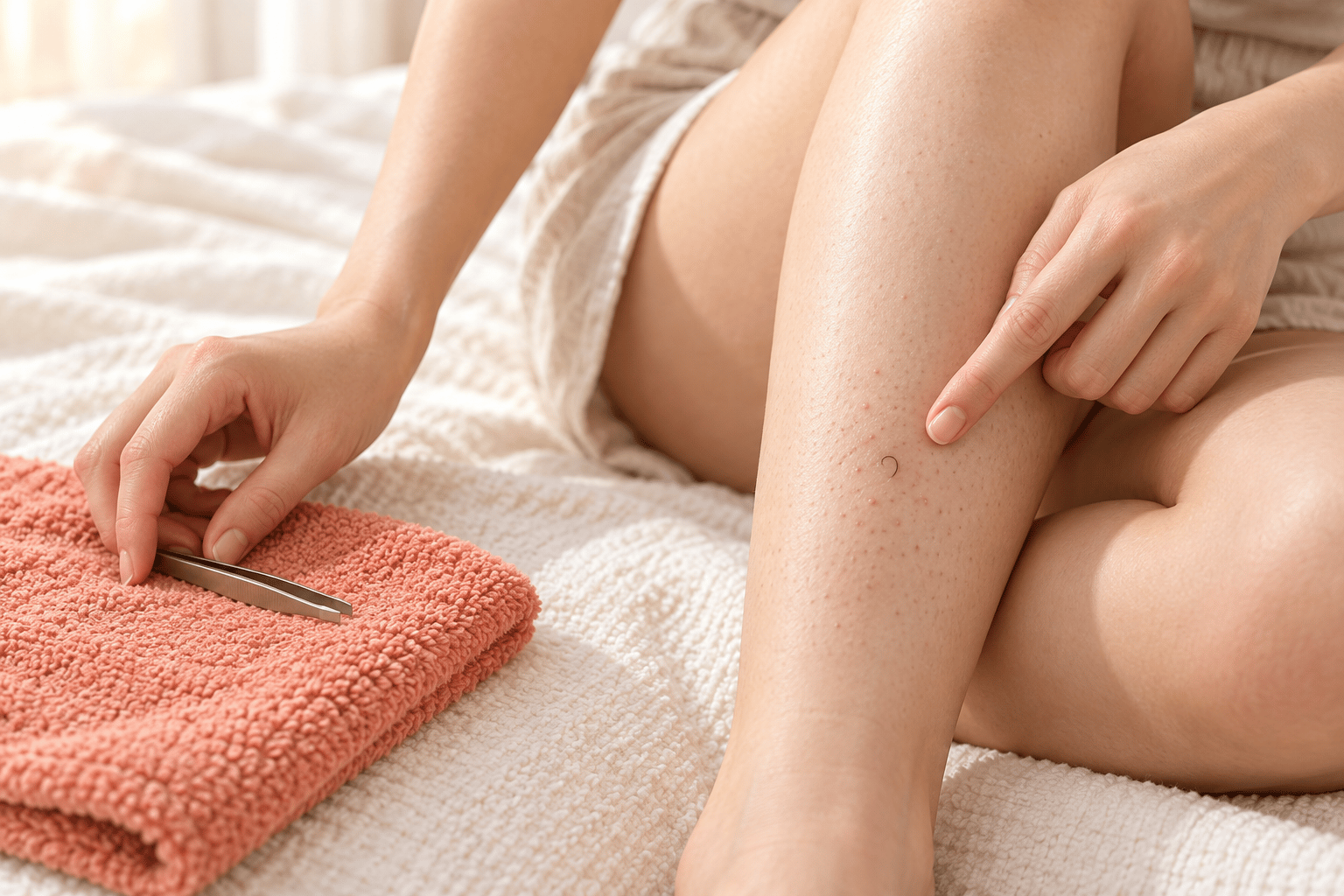
When a curved hair shows at a spot that was shaved, you may want to take out only the tip. But the position of the hair you can see and the extent of inflammation under the skin are not always the same. What is needed now is to separate changes you should not touch from the next way to care for the area, rather than a technique for pulling the hair out.
Are an ingrown hair and folliculitis the same thing?
An ingrown hair is a state in which the hair does not grow straight out of the skin and instead heads into the skin. It can occur after shaving, waxing, or plucking, and it can show up more readily with hair that is coarse or curly. An itchy bump can form where the hair is trapped, or inflammation can come with it.
Folliculitis is the term for inflammation around the follicle the hair comes out of, and not every case of folliculitis is caused by an ingrown hair. A bump that appears after hair removal also needs to be distinguished from irritation, infection, and other skin changes. In particular, blisters or a wide area of skin damage after laser must not be taken simply as part of the hair falling out.
What should I do without touching the visible hair?
Pause shaving, waxing, and plucking on the painful area for a while, and keep clothes or hands from rubbing it repeatedly. Wash gently, then dry without rubbing. On skin that is already red and sore, do not use a strong scrub or a peeling product to try to push the hair out.
Exfoliation helps in some cases, but the suitable product and timing differ according to the condition of the skin and procedures you have had recently. If it is right after hair removal, or if there is inflammation, check with a clinician first. Being treated in the clinic with sterile instruments when needed is not the same as piercing the skin with a needle at home.
What should I change when I shave again?
If you start shaving again after the skin has recovered, check the direction of the hair, do not pull the skin too hard, and do not go over the same area several times. Prepare with warm water and a suitable shaving product, and avoid a dull blade. You can discuss cutting back the habit of shaving very close every day, or other methods such as an electric shaver.
It helps to keep a record of spots that recur, the hair-removal method you used, and when the bump appeared. If it keeps forming in the same place, it is better to have the skin and the hair assessed than only to change the product.
If I switch to laser hair removal, will it go away?
A long-term method of reducing hair can be reviewed as an option, but it does not guarantee that an ingrown hair will definitely go away or will not come back. Suitability is judged by checking skin color, the character of the hair, current inflammation, and similar factors.
Laser can also have side effects, including pain, redness, and swelling, and burns, blisters, infection, pigment change, and scarring. Whether an area that is inflamed now can be treated right away needs to be checked separately. Even if a later appointment is already set, please tell the clinic about the current skin changes first.
You can look at the methods in Women's hair removal counseling. Care that leaves the area untouched, and signs of infection, were cross-checked with the NHS ingrown hair guidance, and the limits and side effects of laser were cross-checked with the American Academy of Dermatology guidance.