
There are times when you keep readjusting your underwear while walking, or when clothing catches during exercise and you stop moving. When this discomfort continues, people come to look up labiaplasty. The starting point of a consultation is when I feel uncomfortable, and what the cause is, ahead of how different the shape is from other people’s.
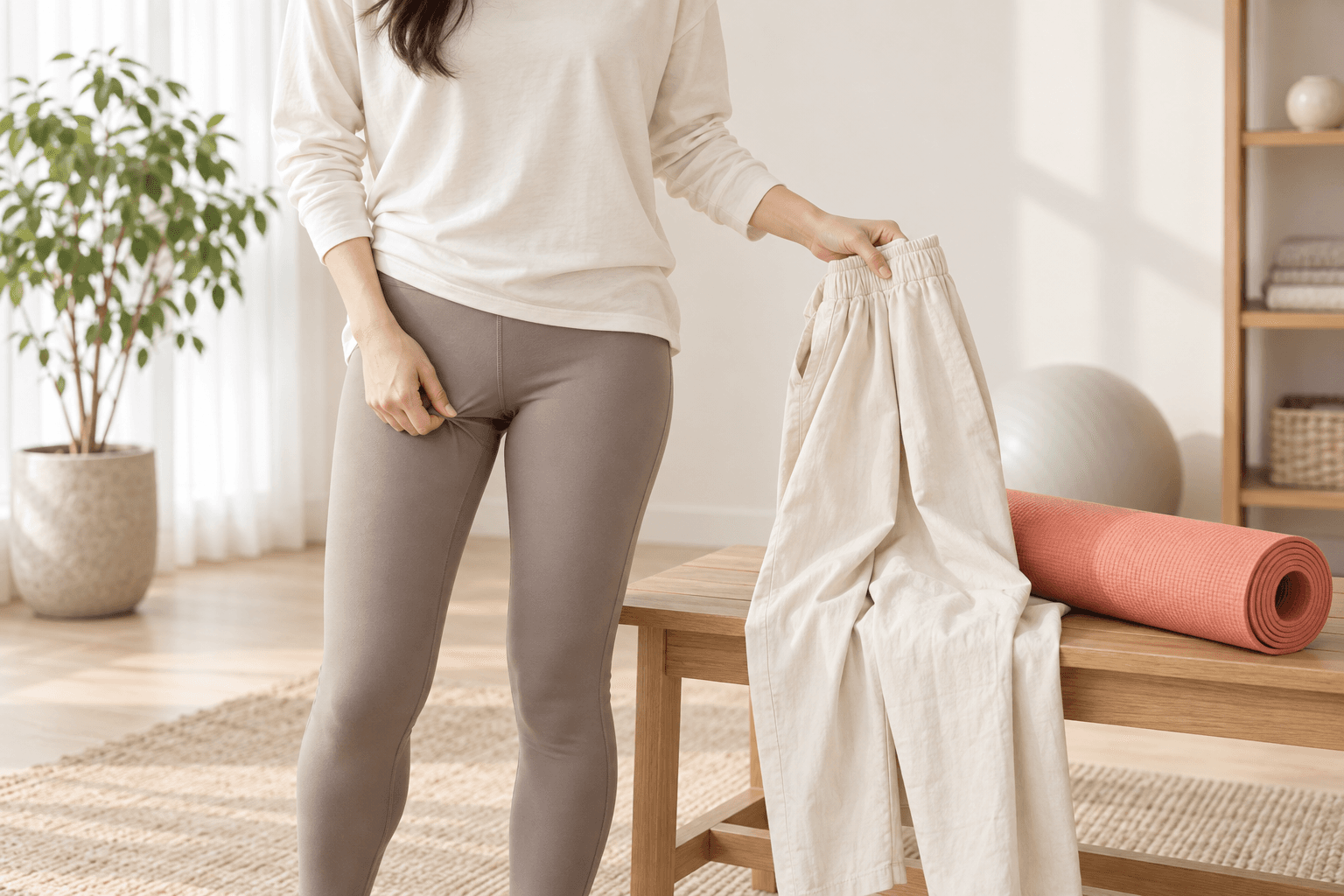
If it chafes and stings, is the shape of the labia minora the cause?
The cause cannot be known from the shape of the labia minora alone. The labia minora, the folds on either side of the vaginal opening, differ from person to person in length, thickness, and left–right appearance, and looking noticeable does not make everyone a candidate for treatment.
When you describe the discomfort, go one step beyond “it hurts,” and separate whether it feels as if the tissue folds into the clothing or whether the skin surface burns.
| Discomfort you feel | What the visit looks at |
|---|---|
| Catching and pulling when wearing certain clothes or when moving | How clothing pressure and friction relate to labia minora tissue |
| Itching, redness, and stinging together | Irritation from cleansers and similar products, and the possibility of a skin condition or an infection |
| Pain even after changing clothes, or pain from only a light touch | Whether there is another cause of vulvar pain besides shape |
This table is not a diagnostic chart. Several causes can overlap, so the place that feels uncomfortable, when it started, and the situations in which it gets worse need to be looked at together. It is better not to judge a left–right difference in the labia minora alone to be the cause of an infection, or to expect that surgery will also make the itching go away.
Is there anything you can change before surgery?
Reduce irritation from contact, and if a skin condition or an infection is confirmed, receive appropriate treatment first. When the skin has become sensitive, the same clothes can feel more uncomfortable.
- Instead of tight bottoms, try roomy clothes and soft cotton underwear. After you change an activity or clothing that was uncomfortable, see how the symptoms change.
- If there are products you have newly started using, such as a scented cleanser or wet wipes, stop using them and check whether the irritation lessens. Do not wash or wipe the vulva by rubbing hard.
- Before applying an ointment, check which cause the medicine is for. Skin conditions and infections need different treatment, so it is better not to keep using the same medicine only because the itch feels similar.
Adjusting daily life does not mean you should endure the discomfort. If daily life is already affected or the symptoms continue, you can be seen even while you try the adjustments. If a wound, a blister, or a new change in skin color or texture appears, do not set it aside as simple chafing—have it examined.
When is labia minora surgery discussed as well?
After other causes have been checked and managed, surgery is discussed as an option when labia minora tissue repeatedly gets caught or pulled and interferes with daily life. Receiving a consultation and deciding on surgery are separate steps.
Labia minora surgery is surgery that excises part of the tissue to adjust size or shape. An examination needs to confirm whether the discomfort you feel is actually related to that tissue, what surgery can change, and which symptoms may remain.
When you weigh this, talk through three things together: the situations in which the discomfort occurs and its effect on daily life, the care you have already tried and how you responded, and the one thing you most want surgery to change. The focus of the consultation also differs depending on whether it is discomfort with walking or exercise, or a concern about shape.
A concern about appearance can be discussed as well. Matching a particular photo, or making both sides completely the same, cannot be promised, and a smaller size does not necessarily lead to satisfaction or improved function. You need time to hear a full explanation of your own accord and to compare the options, including not having surgery.
Will you feel comfortable right after surgery?
During recovery, swelling and pain can instead make sitting or moving uncomfortable, and the symptoms may not lessen as much as you expected. The timing of surgery should include time to recover, not only the day it is performed.
Friction should be avoided until the incision has healed, and when to resume exercise and sexual intercourse is decided after the extent of the surgery and the state of recovery are checked. Another person’s schedule for returning does not become your standard.
These risks do not disappear just because of the name of a surgical method or instrument. Considering the condition of your tissue and your health, you judge together whether a change that may be gained is meaningful enough to accept the burden of recovery and the risks.
What is a good place to start in the consultation?
Please describe one specific scene that was the most uncomfortable. It helps to explain differences that follow clothing or movement, for example, “When I walk, one side feels as if it folds, and it is less so when I change to roomy pants.” Please also say whether itching or a skin change is present together with the pain.
If you want an explanation of the surgery, you can first look at what to confirm during a consultation and the recovery guidance in LILEAP’s Labia minora surgery · labiaplasty guide. You do not need to decide in advance whether to have surgery in order to explain your discomfort.