
Sometimes you come home after hair removal, step into the shower, and find your bikini line flushed bright red, and then a few days later small red bumps appear, which can be unsettling. Most of these are reactions that settle with time, but the same “red and bumpy” look can include changes of quite different kinds, so knowing how to tell them apart can put your mind at ease.
This article focuses on the changes that can appear on the skin after treatment. Preparing for a first treatment is covered in Brazilian laser hair removal: what should you know if it’s your first time?, and hair growing back and the number of sessions in My hair is growing back after laser hair removal. How many sessions will I need?.
My skin is red and swollen right after treatment. Is that normal?
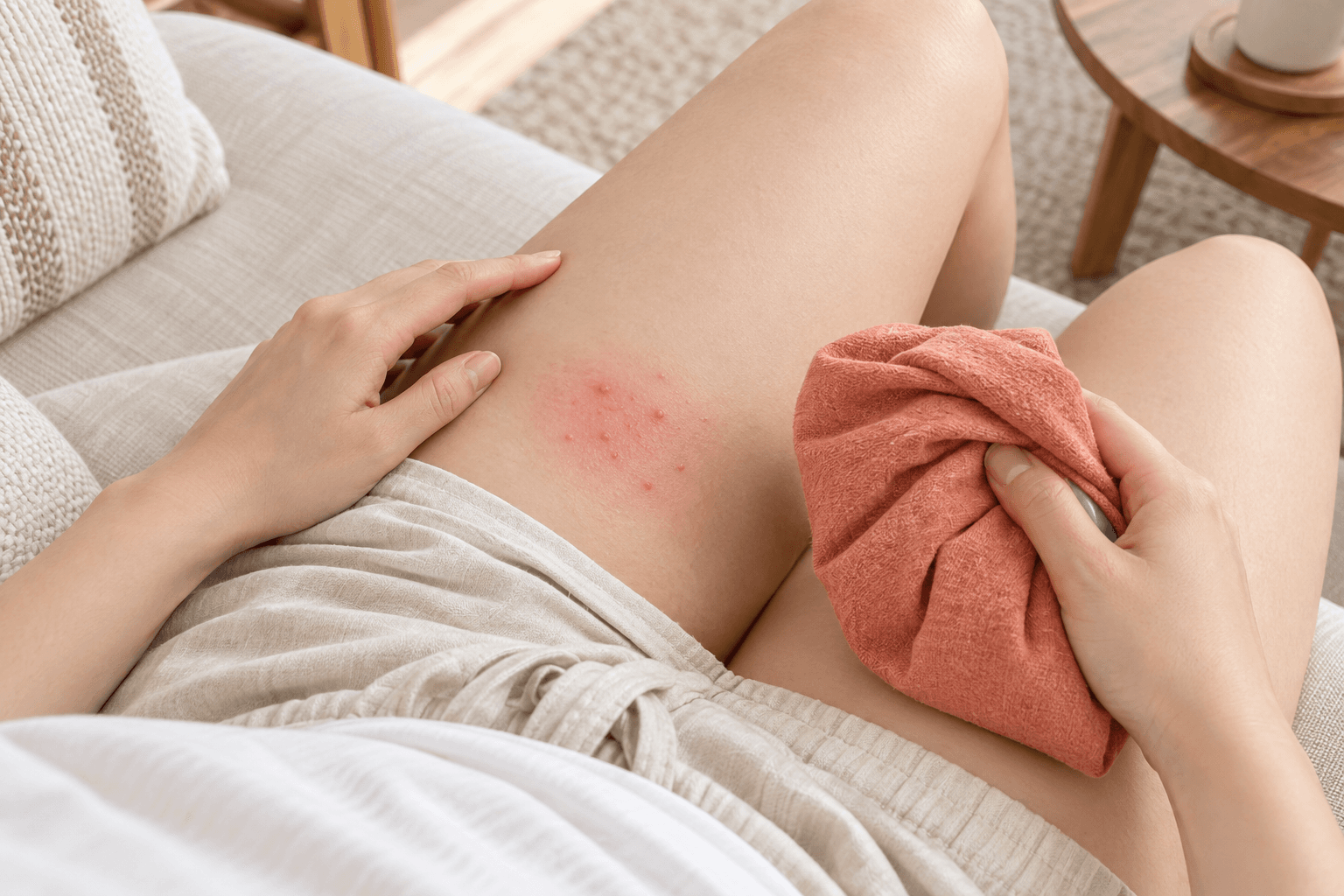
Yes, it is the most common reaction. As the laser’s heat reaches the hair follicles, the surrounding skin also heats up for a while, so it may turn red, swell, or sting, much like a mild sunburn. Each pore may also look slightly raised.
These reactions usually fade gradually over one to three days. Briefly applying a cold compress wrapped in a towel can ease the warmth and discomfort. Don’t put ice directly on the skin or leave it on for a long time. The most important thing to watch is whether the redness fades as time passes or instead gets deeper.
Red pimple-like bumps appeared a few days later. Why?
Around the time the treated hairs are pushed out of the skin, inflammation often develops around the hair follicles (folliculitis). A typical feature is that the skin looks fine right after treatment and the bumps appear a few days later; most cases are shallow inflammation that settles on its own once irritation is reduced.
It is seen more often if your hair is coarse and curly, or in areas where clothing often rubs, such as the bikini line. A case report in a dermatology journal also described the hairs being pushed out as the focus of the inflammation and called it a complication that resolves on its own. However, unlike small bumps on the surface, bumps that become large, firm, and swollen, hurt when pressed, or fill with pus may be a bacterial infection and need to be checked at a clinic.
It looks like a hair is trapped under my skin. Is it an ingrown hair?
If you can see a hair under the skin, or an itchy bump has formed around a single hair, it may be an ingrown hair. This is when a hair cannot come out through the skin and grows back inward; it is common in areas that have been shaved or waxed and with coarse, curly hair.
You may be tempted to dig it out with tweezers or pop it with a needle, but this can injure the skin and may lead to infection or a dark mark. Unless the tip of the hair is already clearly out of the skin, it is better to leave it alone. As sessions add up and fewer hairs remain, ingrown hairs often decrease too, but if they keep coming back in the same spot, let us know before your next treatment.
| If it looks like this | What it commonly may be | How to watch it |
|---|---|---|
| Widespread redness and swelling from the day of treatment, with pores looking raised | A temporary reaction right after treatment | Whether it fades within one to three days |
| Small red bumps at hair spots a few days later | Folliculitis that develops as hairs are pushed out | Whether it settles when you avoid squeezing and reduce irritation |
| An itchy bump with a hair visible under the skin | Ingrown hair | Whether it shrinks when you wait without plucking |
| A large, firm lump, pus, or pain when pressed | Possible bacterial infection | Have it checked at a clinic |
| Blisters, oozing, crusts, or pain that keeps getting worse | Possible burn | Contact the place where you were treated right away |
The table is not a tool for diagnosing yourself; it is a starting point for deciding whether to watch and wait or to get in touch. If several of these appear together or you are unsure, take photos and ask the place where you were treated.
My skin has become darker or lighter. Will it go back?
After laser hair removal, pigment changes in which the skin becomes darker or lighter than the surrounding skin can occur; in many cases the skin returns to its original color over time, but some changes last a long time. They are more likely where there was inflammation, on sun-tanned skin, or if your natural skin tone is on the darker side.
The basics for areas that have changed color are to avoid sunlight and tanning and not to add irritation by scratching or rubbing. Rather than applying lightening ointments or exfoliating products on your own, show the area to the place where you were treated first. Being treated again with the same settings before a color change has settled can add to the irritation, so the timing and method of the next session will be reconsidered.
What should I avoid while my skin recovers?
Until the redness and bumps settle, the key is to cut down on scratching, plucking, rubbing, and heating the skin. The exact time periods may differ depending on where you were treated, so please follow the instructions you were given first.
- Take a break from shaving that area Running a razor over skin with red bumps can spread the inflammation. Once it has settled, shave gently in the direction the hair grows.
- Don’t use waxing, tweezers, or hair removal creams Pulling hair out by the root removes the hair the laser needs to act on at the next session, and adds irritation to skin that is still recovering.
- Put off scrubs and exfoliation Use grainy scrubs or exfoliating products gently, only after the redness and stinging have fully settled, and check with the place where you were treated about when to start.
- Reduce tight clothing and friction The bikini line is where underwear edges and trouser seams keep rubbing. For a few days, choose clothes that rub less, such as loose bottoms and cotton underwear.
- Cut down on situations that raise heat and sweat Put off saunas, hot baths, and exercise that makes you sweat heavily until the redness settles, and if you sweat, wash gently and dry the area.
- Avoid sunlight and tanning If irritated skin gets tanned, pigment changes are more likely to develop or to last a long time.
Which symptoms mean I should get in touch right away?
If you have signs that suggest a burn or infection, such as blisters, pus, or a fever, don’t wait for your next appointment; contact the place where you were treated. Laser hair removal is not a procedure with no risk of skin injury at all, and burns, infection, or scarring can occur, though rarely.
When you get in touch, it helps to share when you were treated, which day after treatment the symptoms started, and what you have done at home, along with photos taken at the same distance and lighting, so that the changes can be assessed. If you also have symptoms that may be unrelated to hair removal, such as itching or a change in discharge, see a doctor separately to find the cause.
What should I discuss before my next session?
Describing the reactions after your last session in detail gives a basis for adjusting the timing, settings, and aftercare of the next treatment. Having had a reaction does not automatically mean you must stop hair removal, but the principle is to continue only after the skin has fully settled.
- What reaction appeared, when, and where Tell us whether redness, bumps, ingrown hairs, or color changes appeared on which day after treatment and how many days they took to settle, and whether they keep recurring only in a particular area.
- Changes that are still there now If there are spots where the color has changed or bumps that remain, it may be better to postpone or give that area a rest.
- Health information that has changed in the meantime Before treatment, tell us about changes that affect how your skin reacts, such as a new medicine, a herpes flare-up, getting sun-tanned, or a possible pregnancy.
- What you have tried at home Telling us which products you used and when you shaved or exfoliated helps in deciding the aftercare advice for the next session.