
If the same spot stings with every period, this is discomfort different from menstrual cramps. Before you wonder whether you should wash more often or use medicine for vaginitis, check where the discomfort is and when it began.
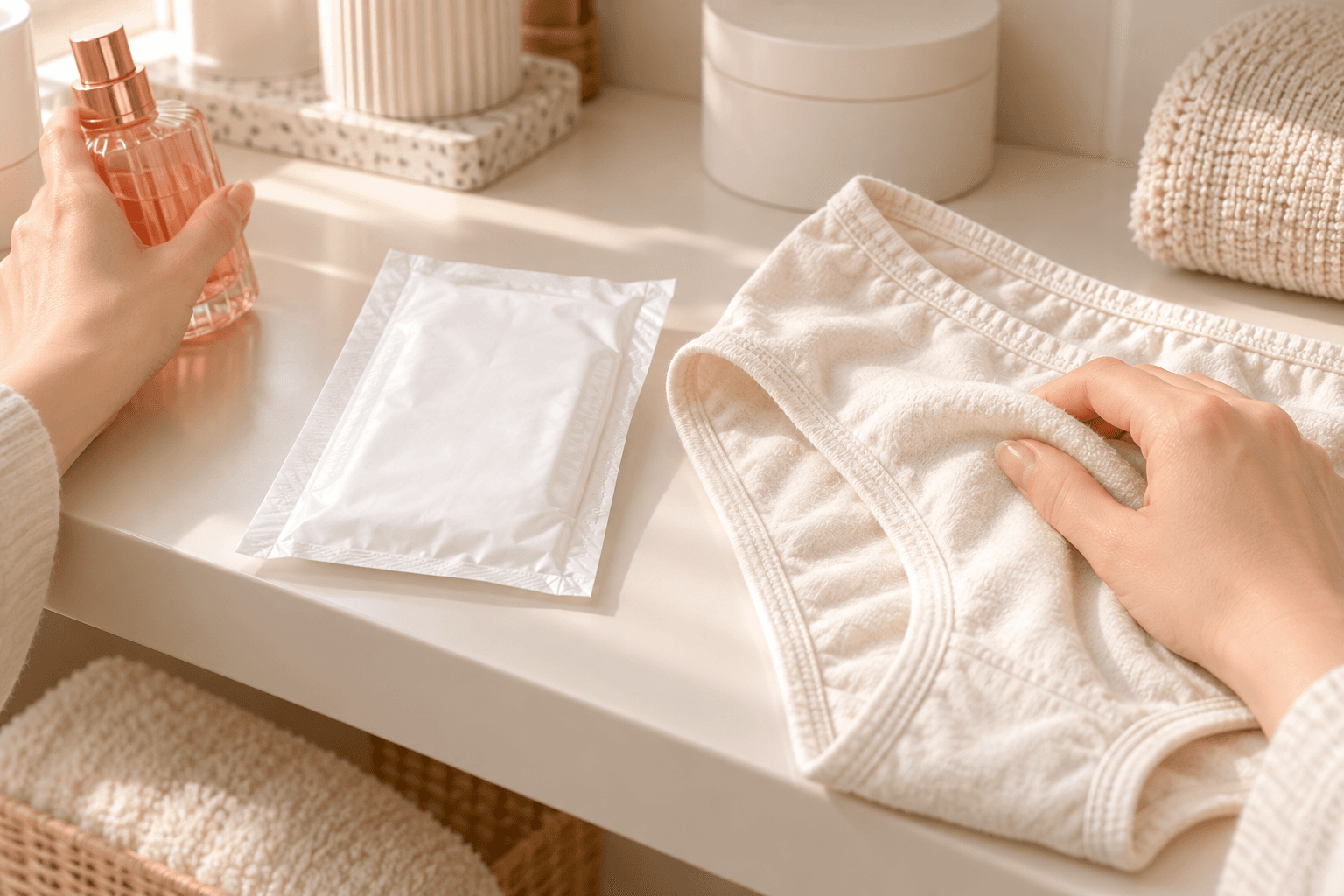
Is the itchy spot the skin, or inside the vagina?
If the vulvar or groin skin that the pad’s surface or edge touches is red and stinging, contact irritation is looked into. The skin staying damp for a long time, rubbing from tight clothing, and the point when a new pad, cleanser, or laundry product was used are clues.
If discharge or an odor unlike usual, or discomfort inside the vagina, is present as well, other causes such as infection also need to be checked. Dermatitis and vaginitis can occur together, so the two cannot be separated completely by location alone. Do not conclude that it is a menstrual-pad allergy only because it “started during a period.”
What irritation can you reduce starting today?
- Keep products simple: For the time being, avoid products that have a fragrance or a deodorizing function, and look for a product whose surface against the skin is soft. A pure-cotton or natural label alone does not guarantee an absence of irritation for everyone.
- Do not leave it wet for long: Change it according to the menstrual amount and the product’s instructions for use, and also change underwear that is wet with sweat. Do not keep wearing a damp pad just because the amount is small.
- Reduce friction: Choose clothes that do not constrict the body and comfortable cotton underwear. Scratching because it itches, or rubbing with a towel, can increase injury to the skin.
- Review how you wash: Gently wash the outer skin with lukewarm water and pat it dry. Do not wash out the inside of the vagina, and do not repeatedly use scented wet wipes or sprays.
Recording the product you changed and whether the symptoms lessen helps at a visit. Changing several products and ointments all at once makes it hard to know what had an effect.
May I apply an ointment I already have at home?
An itch does not mean that an antifungal ointment or a steroid ointment is the right one. Medicine used on the outer skin and medicine used inside the vagina also need to be told apart. Do not use, as it is, an ointment prescribed earlier for a different area. Tell a clinician or a pharmacist where it would be used and what the symptoms are.
If dermatitis needs to be treated, the type, strength, and duration of the medicine are set to the area and the degree. An unsuitable medicine, or use over a long period, can add irritation or make the skin thin. If a moisturizing or protective product also brings on stinging or swelling, stop using it and seek advice.
When should you have this checked at a visit?
Recurrent symptoms, itching that interferes with sleep or daily life, and changes that do not improve even after the products are adjusted are worth having checked. At the visit, the state of the skin and the products in use are reviewed, and an infection test or an evaluation related to allergy is considered if needed. Not everyone needs the same tests.
You can check the direction a consultation may take in Itching visit guide. For principles of skin care, we referred to University of Iowa Hospital vulvar skin care, and for how contact dermatitis is distinguished, to NHS guidance.