
Your expected period date has passed, but your period hasn’t come, and the test shows only one line. You may find yourself alternating between “If I’m not pregnant, why hasn’t my period started?” and “Did I test too early?”
It helps to look back at when and how you tested, rather than how many tests you have used. Let’s work through what you need to know to interpret today’s result.
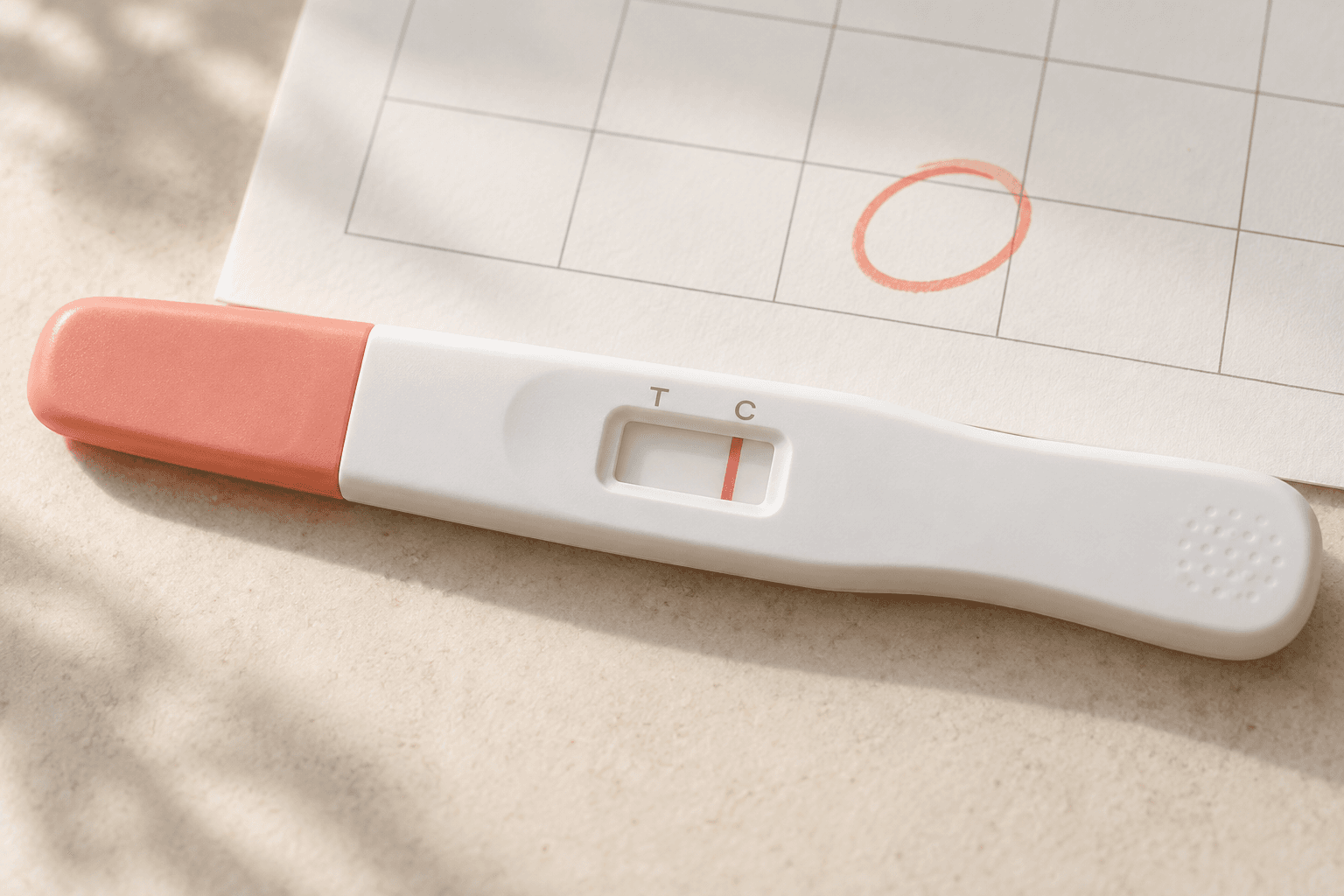
Does one line mean I’m not pregnant?
First check whether the result matches the instructions for a negative result, and whether the test worked properly. Tests that show results with lines have a control line to indicate that the test is working. If the control line does not appear, do not interpret it as negative. Follow the instructions and use a new test.
The expiry date and the time for reading the result also matter. Check the result within the time specified by the product, rather than taking out an old test long afterward to interpret it again. The display and instructions differ between products.
Even a negative result from a correctly used test may not completely rule out pregnancy if you test too early. A urine pregnancy test detects a hormone called hCG, which is associated with pregnancy. In early pregnancy, there may not yet be enough of this hormone for the test to detect.
When should I test again?
Choose the timing according to whether you know when your period is due. If the result is negative but you still think pregnancy is possible, test again a few days later.
| Your situation | When to test |
|---|---|
| My cycle is usually regular, and I know when my period is due. | Most products can be used from the first day your period is missed. Also check when the instructions say your product can be used. |
| My cycle is irregular, so I don’t know when my period is due. | One guideline is to test at least 21 days after the last time you had sex without contraception. |
| The test is negative, but I still think pregnancy is possible. | Wait a few days, then test again following the instructions. If the result is negative again and your period still hasn’t come, seek medical advice. |
Some products can be used before your period is due, but an early negative result does not replace a later test. If you have had sex that could result in pregnancy since your last test, the previous result cannot tell you whether you became pregnant afterward.
Drinking excessive amounts of water just before testing to make yourself urinate can dilute your urine and affect the result. Follow your product’s instructions on the time of testing and how to apply the urine.
What if the next test is negative and my period still hasn’t come?
If a second test is negative and your period still hasn’t started, consult a gynecologist. It is better to review the dates and symptoms together than to keep testing on your own.
Besides pregnancy, factors such as stress, a major weight change, strenuous exercise and hormonal contraception can affect when your period comes. Still, avoid deciding in advance that “I’ve been tired lately, so that must be why.” A test result alone cannot explain why your period is late.
Before your visit, make a brief note of the following. If you cannot remember something exactly, it is fine to share what you do know.
- The first day of your last period and your usual interval between periods
- Dates of sex that could result in pregnancy and the contraception used
- Dates and results of pregnancy tests
- New pain or bleeding, medicines you take and recent lifestyle changes
During the consultation, this information helps your clinician decide whether a repeat test, blood test or other assessment is needed. Different tests have different limits, so not everyone has the same tests.
Are there times when I shouldn’t wait for the next test?
If pregnancy is possible and you develop lower abdominal pain or bleeding, seek medical care promptly. This applies even if you have not had a positive result. In particular, tell your clinician if the pain is on one side of your lower abdomen.
These symptoms alone do not establish a cause, but some situations need prompt assessment, such as an ectopic pregnancy, in which a pregnancy develops outside the uterus. It is important not to put off care based only on the number of lines on a test.