
Maybe it was the day a cough lingered after a cold, or when you laughed hard, or while skipping rope, that you noticed your underwear was slightly damp. It is unsettling, yet hard to mention to anyone, so many women simply start carrying an extra pad and leave it at that. Leaking urine is not something you have to put up with as you get older, nor something to be ashamed of. This article walks through how to tell whether it is urinary incontinence, what you can record and try at home, and when you should not wait.
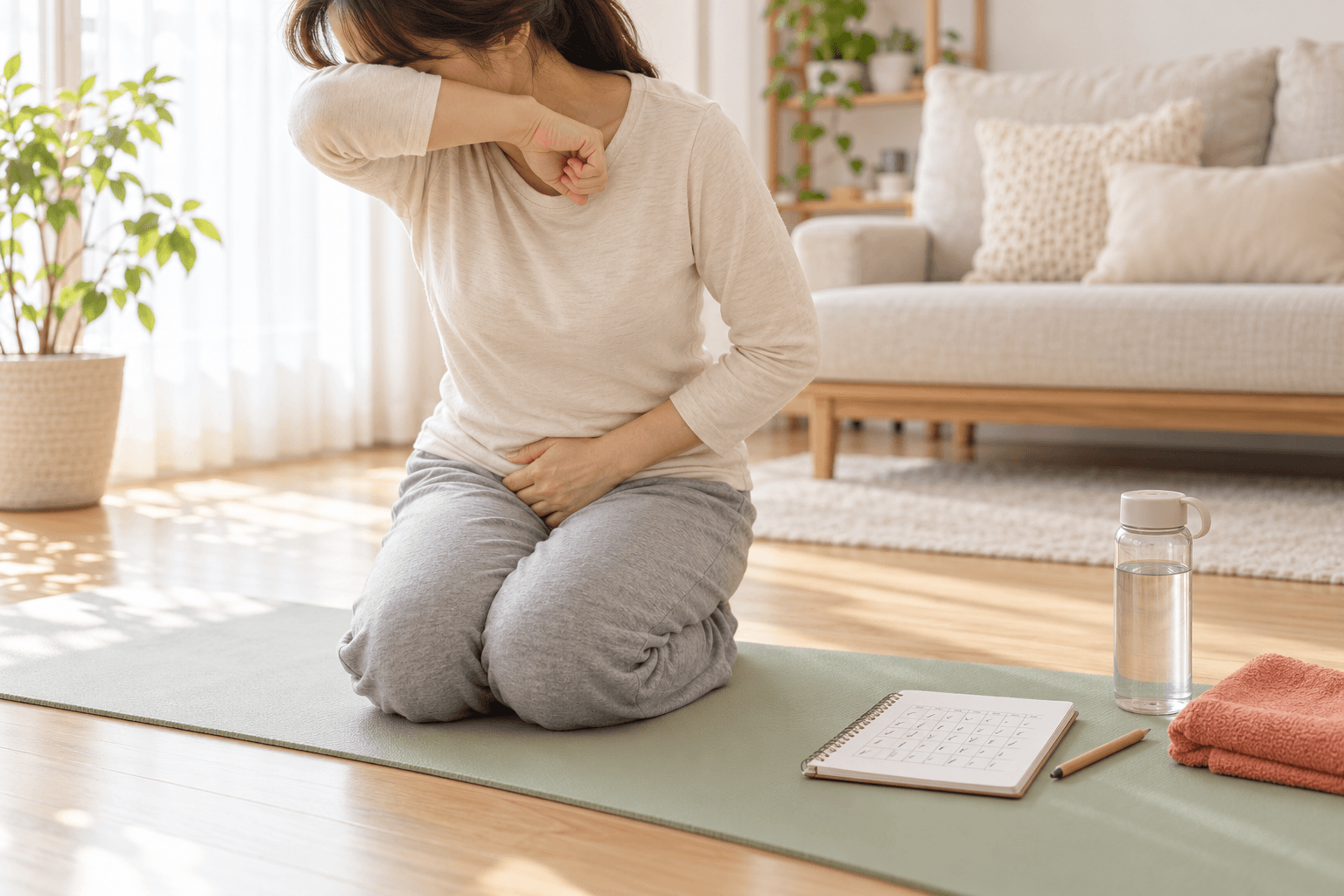
Does leaking just a few drops count as incontinence?
Yes. Even if the amount is small or it only happens now and then, any leakage of urine you did not intend is called urinary incontinence. That said, having this label does not mean everyone needs the same treatment. The next step depends on how often and in what situations it leaks, and how much it affects your daily life.
Urinary incontinence becomes more common after pregnancy and childbirth, especially vaginal birth, or when you have gained weight, and as you get older. Even so, there is no need to treat it as a natural change that everyone simply goes through with age. If your vagina has felt different since giving birth and you also leak urine, you may want to read our article on the vagina feeling looser after childbirth as well.
What differs depending on when you leak?
The most common types are stress urinary incontinence, where you leak when your abdomen tightens, and urge urinary incontinence, where a sudden strong urge comes and you cannot hold on. It is also quite common to have both.
| When leaks happen | Common name | What it often looks like |
|---|---|---|
| Coughing, sneezing, laughing, running, lifting something heavy | Stress urinary incontinence | A small amount leaks the moment pressure rises in your abdomen. Often there is no sense of urgency. |
| Right after a sudden urge that is hard to hold | Urge urinary incontinence | Leaks happen on the way to the toilet or while opening the door. You may need to go often and wake at night to go. |
| Both situations | Mixed urinary incontinence | You leak both when you cough and when you feel urgent. We look together at which one bothers you more. |
The table is only a rough guide, not a way to diagnose yourself. In particular, if stinging when you pee and a repeated need to go came on suddenly, a urinary tract infection such as cystitis can cause both urgency and leakage. In that case, please check our article on cystitis symptoms first. Because the treatment chosen differs by type, confirming which one you are closer to with a record makes your appointment much easier.
How do I keep a bladder diary?
For at least 3 days, write down what you drank, when you urinated and when you leaked, in time order. The UK's National Institute for Health and Care Excellence (NICE) recommends keeping a bladder diary for a minimum of 3 days that covers days with different routines, such as both workdays and days off. A note on your phone or a single sheet of paper is enough.
- What you drank, when, and roughly how much Note water, coffee, tea, fizzy drinks and alcohol separately. Estimating by cup size is fine.
- When you urinated If you can, it also helps to measure how much came out each time with a measuring cup.
- When you leaked and what you were doing Be specific, such as coughing, climbing stairs or hearing running water, and note whether it was a few drops or enough to wet your underwear.
- Moments of sudden urgency Mark the times you felt urgent enough that it was hard to hold, even if you did not leak.
- How many times you woke at night to use the toilet Looking at this together with what you drank before bed can reveal a pattern.
- How many times you changed pads or underwear This helps gauge how much it is bothering you.
What can I try in daily life?
Pelvic floor muscle exercises and managing drinking habits, weight and constipation are things you can try first, whatever the type. Overseas clinical guidelines also recommend them as the first step before medicine or surgery.
- Pelvic floor muscle exercises: With an empty bladder, sit or lie down and squeeze around your vagina and anus as if holding in urine or wind, with a lifting-up feeling. Hold for 3 to 5 seconds, then relax for the same amount of time. Keep your belly, buttocks and thighs relaxed and do not hold your breath. NICE recommends a programme of at least 8 squeezes at a time, 3 times a day, continued for at least 3 months.
- Caffeine and alcohol: Coffee, tea, cola and alcohol can increase the amount of urine and irritate the bladder, so try cutting back and check for changes in your diary.
- Do not simply cut back on water: Drinking too little can make urine concentrated, which can actually irritate the bladder. If you often wake at night, try adjusting only how much you drink in the few hours before bed.
- Weight: The American College of Obstetricians and Gynecologists (ACOG) notes that if you are overweight, losing even a little weight may reduce how often you leak.
- Constipation and coughing: Straining hard on the toilet or coughing for a long time puts repeated pressure on the pelvic floor. Manage constipation with vegetables, fruit and fluids, and if you smoke, quitting helps reduce coughing.
What are the limits of managing on your own?
Lifestyle measures alone are often not enough, and even when they help, it takes time. It can take several weeks to several months after starting exercises to notice a change, and symptoms may return if you stop.
- Squeezing the wrong muscles or tightening your belly during exercises may not help. At first, finding the right muscles can be harder than you expect.
- Not all urinary incontinence is caused by weak muscles. Urgency is related to the bladder being overly active, so it may need a different approach.
- If you develop pain during or after exercising, or the discomfort gets worse, stop and seek advice.
If the discomfort continues even after recording and lifestyle measures, the next step is to confirm the type at an appointment and discuss a suitable approach. At an appointment, the doctor usually reviews your symptoms together with your bladder diary and uses an examination and a urine test to check for other causes. Options by type, such as bladder training, medicine or surgery, and the side effects of each, are decided together after that. You can preview how care works in LILEAP's guides to urinary incontinence symptoms and diagnosis and non-surgical urinary incontinence care.
What signs mean I should see a doctor promptly?
If other changes come along with the leaking, do not assume it is just incontinence and wait. See a doctor.
Even without these signs, if worrying about leaks has made you avoid going out or exercising, that alone is reason enough to seek advice. You can check our hours and location at Hours and directions.