
“Surgery feels burdensome. Could laser or filler achieve the same change?” When you seek a consultation about a feeling that has changed after childbirth, you may come across several methods at once. A loose feeling, pain when there is friction, and the discomfort of urine leaking cannot be used to choose a method by the same standard.
Moving one step beyond the stage of preparing for a postpartum consultation, this time we will look separately at what is done to which tissue, and whether that change also resolves your own discomfort. What follows is a general distinction among methods. It does not describe specific devices or products, or the treatments offered by a particular clinic.
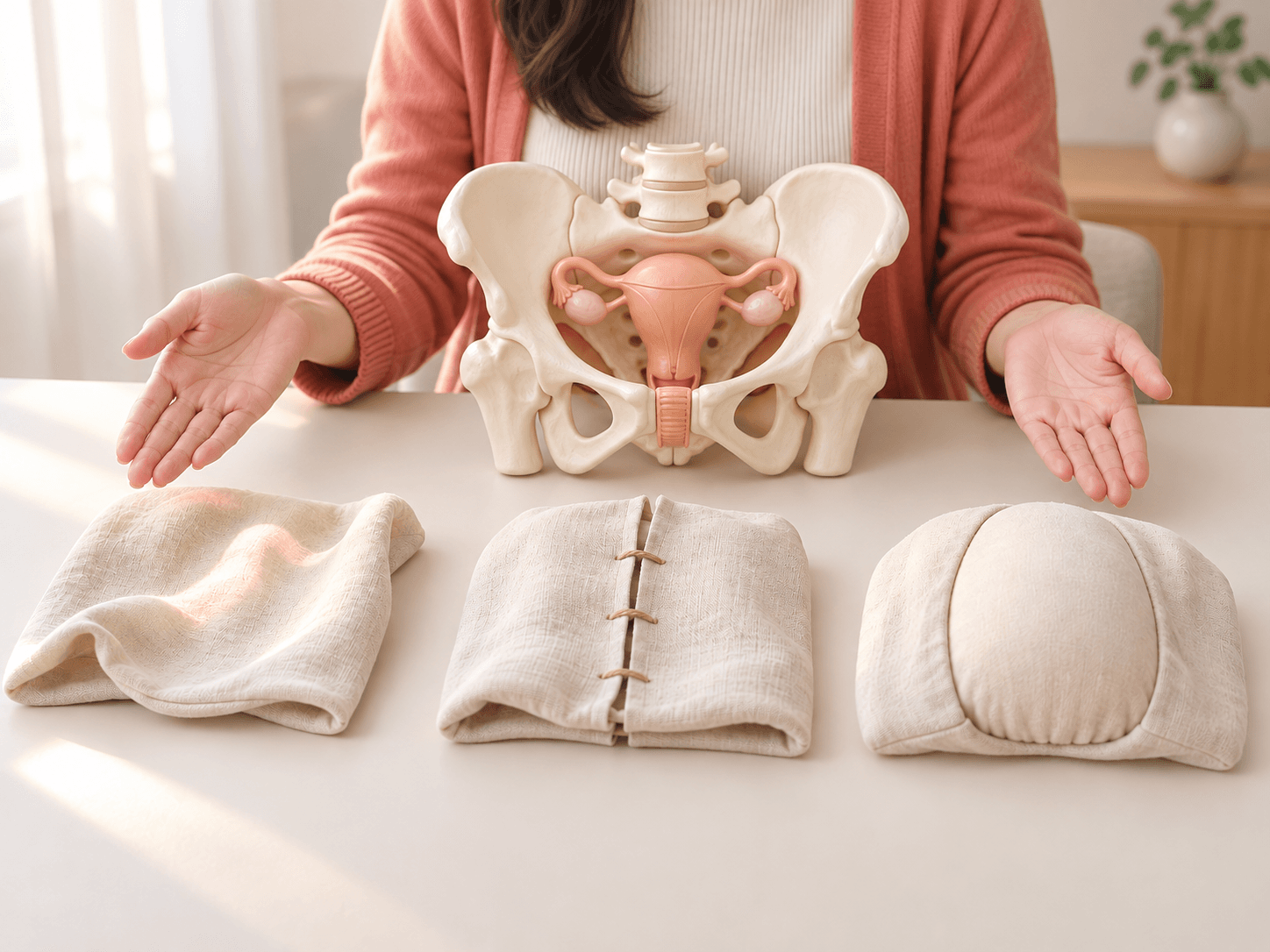
This is a conceptual image arranging a pelvic teaching model and cloth props that represent light, suturing, and filling. It is not a photograph showing actual human anatomy or the course or results of a procedure.
How do the three methods differ?
It is easier to understand when you separate a response caused by energy, a change in shape made by surgery, and the volume occupied by injected material. ‘Vaginal plastic surgery’ is a broadly used term, so this article explains, as the surgical item, vaginoplasty that adjusts width by excision and suturing.
| Method | Change made to the body | Question to check before deciding |
|---|---|---|
| Vaginal laser | Energy is delivered to the vaginal wall to induce a tissue response | Is there evidence for my symptoms, and an authorized purpose for this device? |
| Vaginoplasty | Necessary tissue is adjusted and sutured, changing the vaginal width and the shape of the opening | Does the cause of the discomfort match the area that surgery would address? |
| Vaginal filler | Material is injected into a planned site, with a change in volume as the goal | What material is it, and what limits apply to use at the vaginal site and to removal? |
This table is not a ranking of effect. A change in the space inside the vagina, and a decrease in pain or greater comfort in sexual life, need to be evaluated separately. Surgery or a procedure is not needed solely because a person has given birth.
If vaginal laser has no incision, is the burden smaller?
Safety or effect cannot be judged from the explanation that there is no incision alone. Because energy acts on tissue, burns, scarring, pain during sexual intercourse, or pain that lasts a long time can occur.
When looking into laser, do not stop at the broad description ‘a procedure for elasticity.’ Ask what change is expected for your symptoms. A response in the vaginal wall, by itself, does not mean that dryness, a sense of laxity, and sexual function improve together. Not every method introduced under the name tightening is a laser.
Patient guidance from the American College of Obstetricians and Gynecologists (ACOG) explains that energy-based treatment such as laser, for a vaginal cosmetic purpose and for menopause-related symptoms, urinary incontinence, and sexual problems, has not received U.S. FDA approval, and it explains the risk of serious injury. This is guidance about regulation in the United States. It is not a source for judging, in its place, whether there is authorization in Korea. In Korea, the authorized purpose and site of use of the actual device, and research on the symptom in question, need to be checked separately.
In what situations is vaginal plastic surgery considered?
It is considered together with non-surgical options when the tissue condition confirmed on examination and the cause of the discomfort match the goal of surgery. It is not a process of deciding how much to narrow from the sensation alone.
In vaginoplasty, methods of adjusting and suturing the mucosa or supporting tissue are considered. Whether the vaginal opening or the inside will be addressed, whether excision is needed, and how far the muscle will be addressed require an explanation after examination. Please also share any experience of injury or suturing at childbirth, any previous surgery, and any plan for a future pregnancy.
Risks of surgery include bleeding, infection, scarring, changes in sensation, and dyspareunia. You also need an explanation of injury to surrounding tissue or organs and of situations that require additional surgery. If the area becomes too narrow or scarring remains, new pain can develop, so ‘the narrower, the better’ is not an appropriate goal.
In its recommendation on genital cosmetic surgery, ACOG explains that high-level data supporting effectiveness are lacking. It also distinguishes surgery to treat disease or injury from surgery undertaken with the expectation of a cosmetic improvement or an improvement in sexual function. Whether an individual needs surgery, and whether satisfaction can be guaranteed, are different questions.
What to check about the extent of surgery and during recovery can also be reviewed in the Guide to vaginoplasty.
If vaginal filler is placed and you do not like it, can it just be removed?
Depending on the material, removal may be difficult or complete removal may not be possible, so the way of reversing it needs to be understood first. Do not think of it as light care only because it is received by injection.
Vaginal filler is a method in which material enters the tissue. It differs from surgery that gathers tissue by suturing, and a change in volume does not itself mean recovery of pelvic floor function or an improvement in sexual satisfaction. Check not only the product name but the ingredients, the intended use authorized in Korea, the injection site, and the evidence for that site. An explanation that it is used on the face or another site cannot, by itself, establish safety at the vaginal site.
Besides pain, swelling, and bruising, infection, lumps, a foreign-body sensation, and asymmetry can occur. Filler injection in general also carries serious risks, such as tissue damage from blood-vessel injury and blockage of blood flow, so an explanation matched to the actual product and location is needed. FDA safety guidance on fillers distinguishes authorization by body site, risks, and the difficulty of removal. This material is not evidence approving the effect of vaginal filler or its use in Korea.
If you have had an injection before, bring the time and site you remember and, if possible, the product record. You may also read the items to check in advance in the Vaginal filler consultation guide.
What should you ask first in a consultation?
Ask for the cause, the goal, the other options, recovery, and the response if a problem occurs to be explained as one set. A consultation can begin without choosing a procedure name first.
- Check which discomfort you are seeking to treat Say specifically whether a loose feeling is the main issue, whether it is dry or painful, or whether urine leaks. For a sense of dryness, moisturizing, lubrication, or hormone-related treatment can be considered. For a problem of pelvic floor function, treatment or training suited to it can be considered. Also ask about the option of following the course without a procedure.
- Separate the expected change from what may be difficult to resolve Ask, “Does this method address the cause of my symptoms? What part may remain unresolved?” Receiving several methods together does not mean that effect or safety is added automatically.
- Check the recovery period against your own schedule You receive guidance on when to resume work, exercise, and sexual activity, and on which symptoms mean you should stop and make contact. Do not use the dates in someone else’s review as the standard for your recovery.