
When you look for a product because of dryness, the words cream, gel, moisturizer, and lubricant are mixed together, so the choice is difficult. It is easier to tell them apart by looking first at “when you are uncomfortable” and “where it can be used,” rather than at the shape or price of the container.
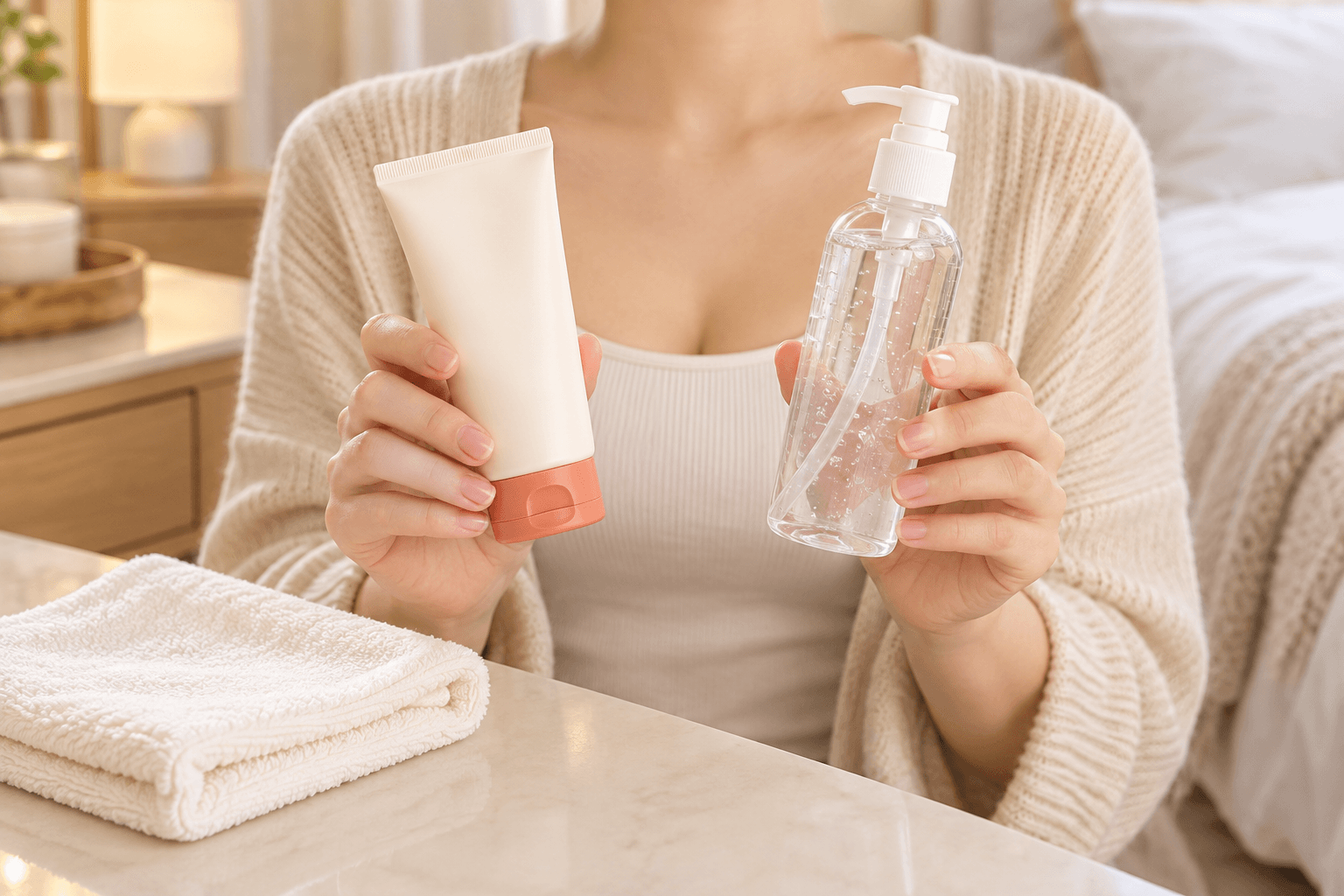
Is it everyday dryness, or discomfort during friction?
| Category | Vaginal moisturizer | Lubricant |
|---|---|---|
| Main purpose | Manage dryness felt in daily life | Provide lubrication when friction occurs, such as during sex |
| When to use | Use at the interval the product describes | Use when needed, following the product directions |
| What to check | Range of use inside the vagina and on the vulva, and the ingredients | Site of use and compatibility with products used together, such as condoms |
| Shared limit | Does not diagnose or treat infection or other conditions | Does not diagnose or treat infection or other conditions |
A dry feeling all day and pain from friction during sex can be present together. Rather than deciding that choosing one means the other is unnecessary, look at which discomfort remains, and when.
What should you read in the product description?
The inside of the vagina and the skin of the vulva are not the same area. Do not use a lotion for the face or the body inside the vagina. The words “gentle” or “natural” alone cannot be used to judge that a product is suitable for use inside the vagina.
Also check whether it contains fragrance or ingredients that irritate. If you have stinging or swelling after use, do not apply more to try to get used to it. Stop, and then seek advice. If several products are changed at the same time from the start, it is hard to tell what caused the irritation.
If you use latex condoms, check compatibility with the lubricant. Products that contain oil can affect latex, so choose a water-based product or a product whose compatibility has been confirmed, and follow the product instructions. A lubricant itself does not provide contraception or prevent sexually transmitted infections.
Does dryness mean hormones are lacking?
Hormone changes around menopause or during breastfeeding can be involved, but medicines, irritating products, and other conditions need to be considered as well. Brief comfort after using a moisturizer does not, by that fact alone, mean the cause has been confirmed.
If sex is painful, it is best not to continue while bearing the pain. Enough time, adjusting stimulation, and lubrication can help, but if the pain keeps returning, causes other than dryness are checked as well. Please describe where the symptoms are and how they behave, rather than deciding on a particular procedure first and fitting a cause to it.
Try explaining it this way at your consultation
Please explain separately “whether it burns even in ordinary life or hurts only with friction,” “which product you used and where,” and “what improved after use and what became more uncomfortable.” Depending on the cause, options such as day-to-day care or hormone therapy can differ, and the same method is not right for everyone.
You can look at what a consultation covers in Vaginal dryness visit guide. For the role of the products and the signs that call for a visit, we referred to NHS vaginal dryness guidance, and for latex and lubricants, to Cleveland Clinic daily-care material.