
After a shower or hair removal, a skin color you had not looked at closely before may bother you. When you wonder, “Was it always like this?” or “Should I have labia majora brightening?”, it helps to separate a long-standing appearance from a recent change before looking straight for a product or procedure.
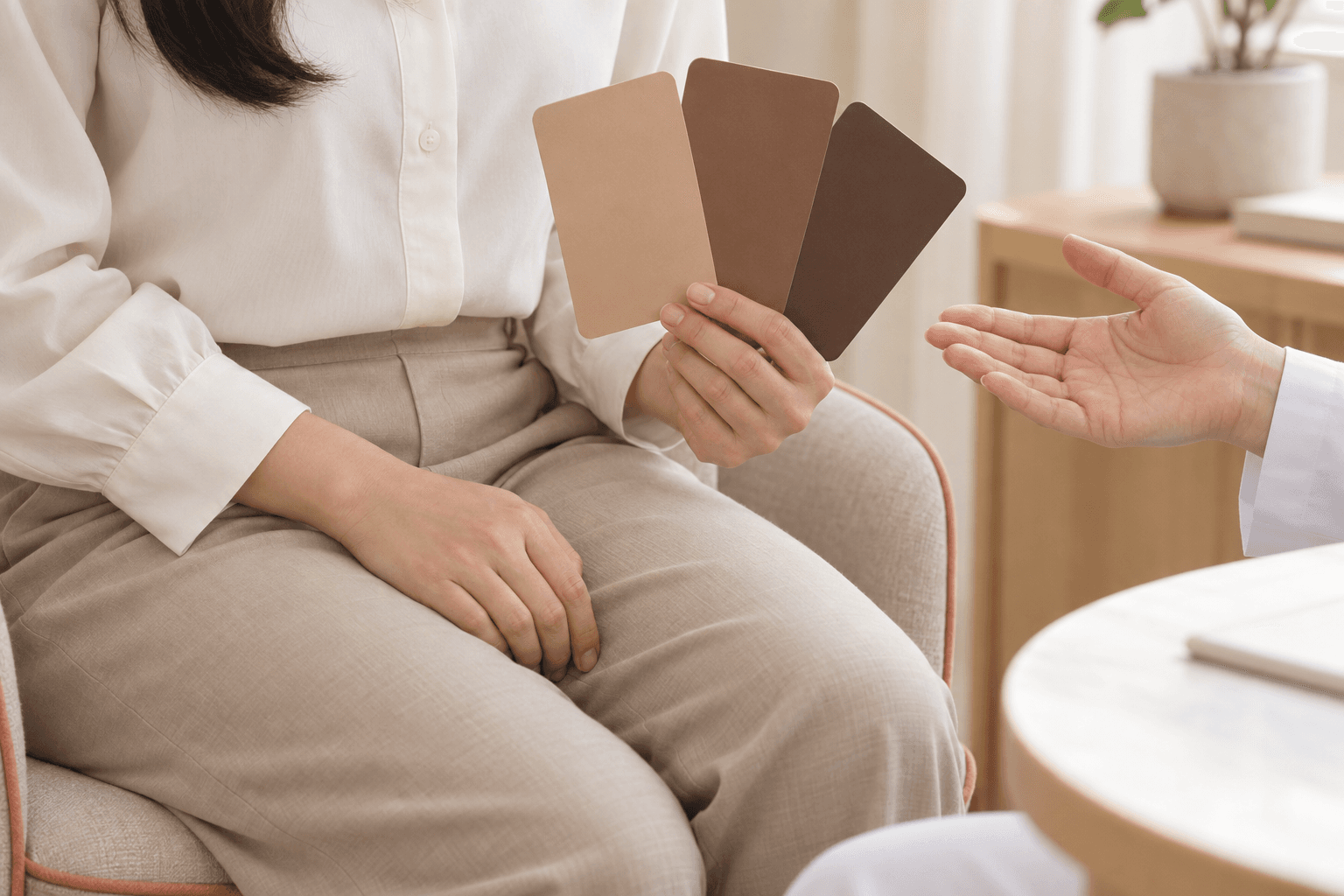
The color cards are props for explaining differences in skin color. They are not a color chart for judging what is normal, and they are not before-and-after photographs of a procedure.
What color should the vulva be to count as normal?
There is no single normal color that applies to everyone. Shades range from pink, red, or purple to brown and very dark colors, and the vulva does not have to match the color of other parts of the body.
The vulva refers to the genital area visible from the outside. The labia majora, the outer folds of skin, the labia minora inside them, and other structures are included, and the vulva is distinguished from the vagina, which continues inside the body. “Labia majora brightening” is therefore a way of speaking about concern for the color of one specific part of the vulva. The two names cannot be taken to mean a procedure on the same area by the same method.
Washing habits or sexual activity cannot be judged from color alone. If there is no discomfort and the color has been present for a long time, it does not have to be changed to match another person’s appearance or a photograph in an advertisement.
Why does it look darker than before?
Inherent skin color, changes through life, and pigment left after irritation of the skin are considered together. Noticing the color for the first time and an actual recent change in color also need to be kept apart.
- An appearance that changes along with changes in the body: The appearance of the vulva is affected by hormones and age. During pregnancy, the labia may look swollen or become darker. The degree of change after childbirth also differs from person to person.
- Where irritation or inflammation has passed: Brown marks left after the skin is injured or after inflammation are called post-inflammatory hyperpigmentation. Think back to whether there was rubbing, scratching because of itching, or stinging after a new product. Friction is not the cause in every case of darkening.
- Looking closely, for the first time, at skin that hair had covered: After hair removal, what is visible changes. Color found at that time does not necessarily mean it appeared newly because of hair removal. If redness, pain, or blisters appear right after hair removal, whether the skin has been injured needs to be checked.
“Which area changed recently, and in what way” helps in finding the cause. Do not decide by comparing color from the lighting of a photograph or the brightness of a screen alone.
Which changes mean you should be seen?
If a new spot, a change on the skin surface, or ongoing discomfort is present, have it checked in obstetrics and gynecology or dermatology. Changes that appear along with the color matter more than the fact that the pigment is dark.
- When a spot newly appears in one area, or the shape or color of an existing mole changes
- When itching continues, or the skin becomes thicker and looks raised
- When a wound, an ulcer, or a lump appears, or the vulva bleeds unrelated to menstruation
- When an area has become red or white, or pain or stinging continues
These symptoms do not all mean a serious disease. Causes such as inflammation and skin disease vary, so it is better to be examined before trying to cover the area with brightening. At the visit, you are asked when you noticed it and which products you used, the skin is looked at, and further tests are explained if needed.
If you are considering vulvar brightening, what should you ask?
First check whether the change is due to a medical condition or irritation, then discuss whether the change you want is possible and the risks you would accept. When the difference in color is normal, choosing not to have a procedure is also possible.
In the consultation, check the following before “How many sessions would I need?”
- Which area is it for, and what method is used? Ask specifically whether the area is the outer skin of the labia majora or another site. Do not assume that a method used on the outer skin can be applied in the same way inside the vagina or on mucosa.
- What degree of change can be expected? The result differs with the original skin color, the cause and depth of the pigment, and how the skin responds. A change to one specific color, or the disappearance of all pigment, cannot be guaranteed. A consultation about pigment also does not mean that concerns about wrinkles and firmness will be addressed together.
- Is there a possibility the skin will be harmed instead? Depending on the method, irritation, burns, or scarring may occur, or pigment changes such as further darkening may appear. Skin that is inflamed needs treatment of the cause first. Ask also for an explanation of the criteria for stopping if the response is poor, follow-up visits, and activities to avoid during recovery.
You can also see what to check according to the area and the condition of the skin in LILEAP’s Vulvar Brightening Consultation Guide.
What should you be careful about at home?
Do not rub hard to change the color quickly, and do not apply brightening products for the face or body on your own. Vulvar skin is sensitive to irritation, and repeated irritation can add discomfort or a change in pigment.
Wash the outer area gently with lukewarm water, and do not wash inside the vagina. Do not try to remove dead skin with a scrub or a product with strong ingredients, and avoid clothing that rubs and products that stung after you used them. If you have already used a product, tell the clinician the name, where you used it, for how long, and the reaction afterward. Care in daily life is for reducing irritation. It is not a method for making the original skin color lighter.