
Your period stays away for several months and then suddenly starts, and in the meantime acne keeps breaking out around your jaw. It also seems that you have to deal with unwanted hair more often than before. Each change may seem minor on its own, but when several overlap, you may find yourself typing “polycystic ovary syndrome” into a search bar.
Rather than giving a diagnosis, this article talks about how to gather those signs and what is worth checking alongside them.
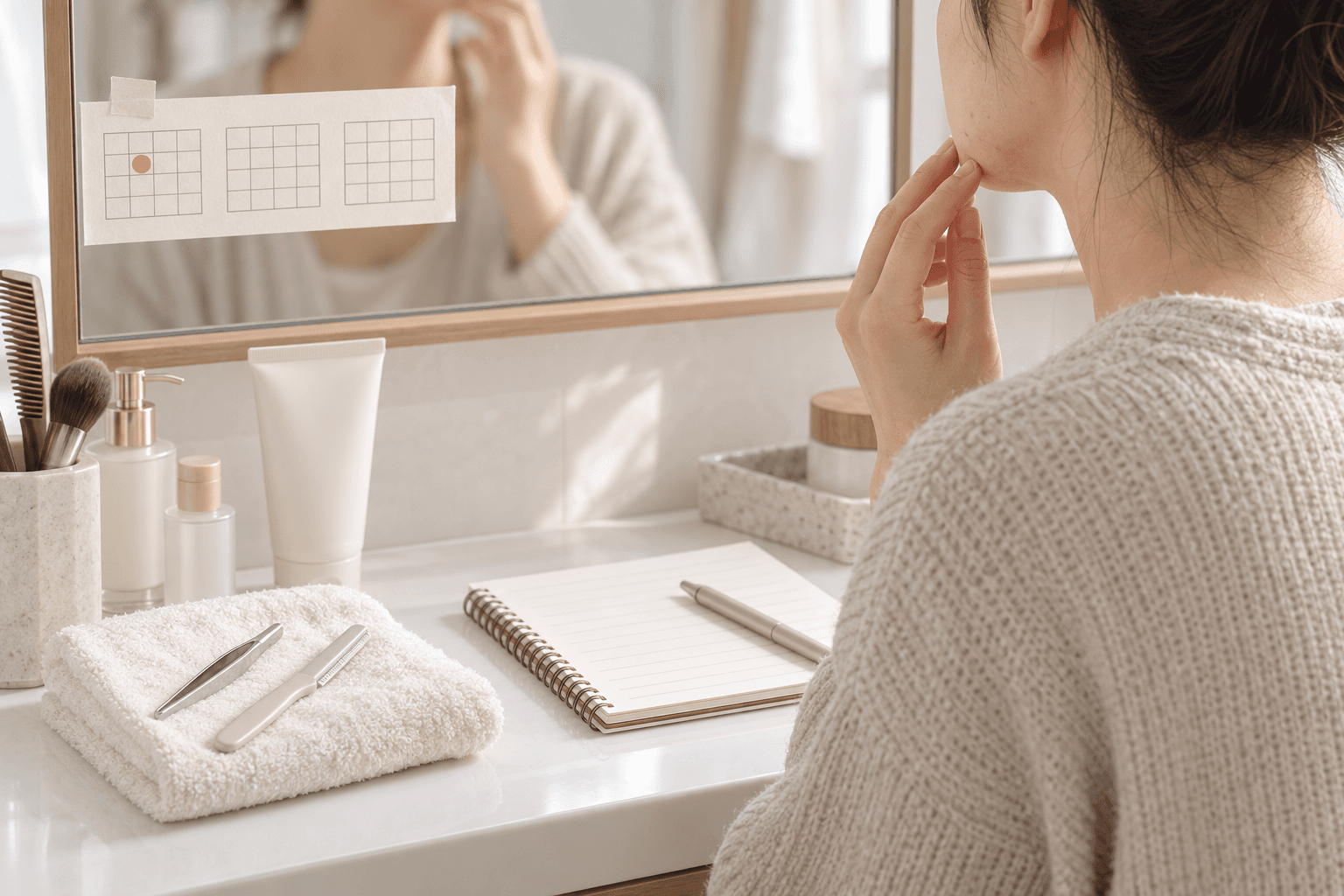
If I skip periods and have more acne and body hair, is it polycystic ovary syndrome?
It is a combination worth checking for that possibility, but it is not enough on its own to say it is polycystic ovary syndrome. This condition is a hormonal state in which ovulation does not happen regularly and the effects of androgens (male hormones) appear, and which symptoms stand out differs from person to person.
For some people, period problems are the first thing they notice; for others, concerns about skin or body hair come first. That is why, rather than looking at a single symptom on its own, it helps to note which changes overlapped, and in what order.
| Change to look at | What is helpful to note down |
|---|---|
| Periods | Whether you have skipped any months, the longest recent gap, and since when |
| Skin | Where acne mainly appears (jaw, neck, chest, back, etc.), when it changed from before, and any treatments you have tried |
| Body hair | Whether thick, dark hair has increased on the chin, upper lip, chest, abdomen, etc., and changes in which areas you remove hair from and how often |
| Scalp hair | When you felt the hair around the crown getting thinner or more hair falling out |
| Weight and daily life | Whether your weight has gone up or down, and any changes in eating, sleep, exercise, or stress |
| Other changes | A feeling that the skin on the neck or armpits has become darker and thicker, or tiredness that is different from before |
This table is not a diagnostic chart for scoring yourself. Filling in only the boxes you remember is enough. The basic way to record period dates is covered in When your menstrual cycle changes, what should you record?, so think of this as adding the changes in your body that came along with your periods.
Photos can sometimes help. Acne can look different from day to day, and if you removed hair just before the visit, it is hard to show how much hair you usually have. That said, you do not have to bring photos; describing it in words is fine too.
Can the same symptoms come from other causes?
Yes. Late or stopped periods and changes in skin and body hair also appear with causes other than polycystic ovary syndrome. That is why, at the visit, other causes are checked as well rather than looking only for this condition.
- Possibility of pregnancy: If your period is late and there is even a small chance of pregnancy, this is checked first. Looking at other causes comes after that.
- Other hormone problems: Changes in thyroid function, or high levels of prolactin, a hormone involved in producing breast milk, can also cause period changes.
- Major changes in weight or daily life: Periods can also stop after losing a lot of weight in a short time, greatly increasing how much you exercise, or going through a period of heavy stress.
- Medicines and contraception: Whether the timing of starting or stopping a medicine or a hormonal contraceptive overlaps with the changes is looked at.
- Age and life stage: For several years after the first period, it is common for cycles to be irregular and for acne to appear. In the teenage years, the judgment is made more carefully, using different standards from adults.
Which tests are done and in what order is explained in detail in the earlier article How are changes in your menstrual cycle evaluated, step by step?. What you need to do before your visit is not to guess the cause, but to tell us which of the items above apply to you.
Can I trust what I have heard from people around me?
Some of the things people commonly say are only partly right or can be misleading. Going over a few of them can help ease worry and also help you not put off care you need.
Because it is often shortened to “PCOS,” once you hear the diagnosis it can feel as if every symptom will be explained by the same name. In reality, the problems that stand out differ from person to person, and what to manage first is also decided differently for each person.
If I want to get pregnant later, what should I ask?
Having polycystic ovary syndrome does not mean you cannot get pregnant. If ovulation is irregular, the process of preparing for pregnancy may take longer, so if you have plans, it is good to let us know early in your visit.
The direction of management and the choice of medicine differ depending on whether you are trying to get pregnant now, thinking about it a few years from now, or have no plans yet. Please also talk about whether you need contraception. If your plans are not decided, it is fine to say that they are not decided.
What should I organize before my visit?
Bringing your period dates, together with when the changes in your skin, body hair, and weight started, gathered on one page, is enough. There is no need to put off your visit to make a perfect record.
- Recent period dates and the longest gap Write down the start dates you can remember, any months you skipped, and the date of your last period.
- When changes in skin, body hair, and scalp hair began Note when your acne got worse, which areas you have been removing hair from more often, and any skin treatment you have already had.
- Medicines you take and your contraception method Note prescription medicines, the dates you started or stopped birth control pills, and the names of any supplements you take regularly.
- Family health history If anyone in your family has diabetes or has had similar period problems, please let us know.
- Possibility of pregnancy and your plans Note whether there has recently been a chance of pregnancy, and what your plans are going forward.
You can check in advance how this information is looked at during a visit on LILEAP’s Polycystic Ovary Syndrome care page and Irregular Periods / Amenorrhea care page.