
“I heard it’s just a quick injection. Is there still anything I should know beforehand?” When you look into vaginal filler, the short procedure time is often the first thing you notice. But because the needle reaches sensitive mucosa and the material stays inside the body, there are clear things to take care of both before and after.
The differences from vaginal laser and vaginoplasty were covered in a column comparing the three methods. This time, we focus on what to check before and after the procedure if vaginal filler is already one of the options you are considering.
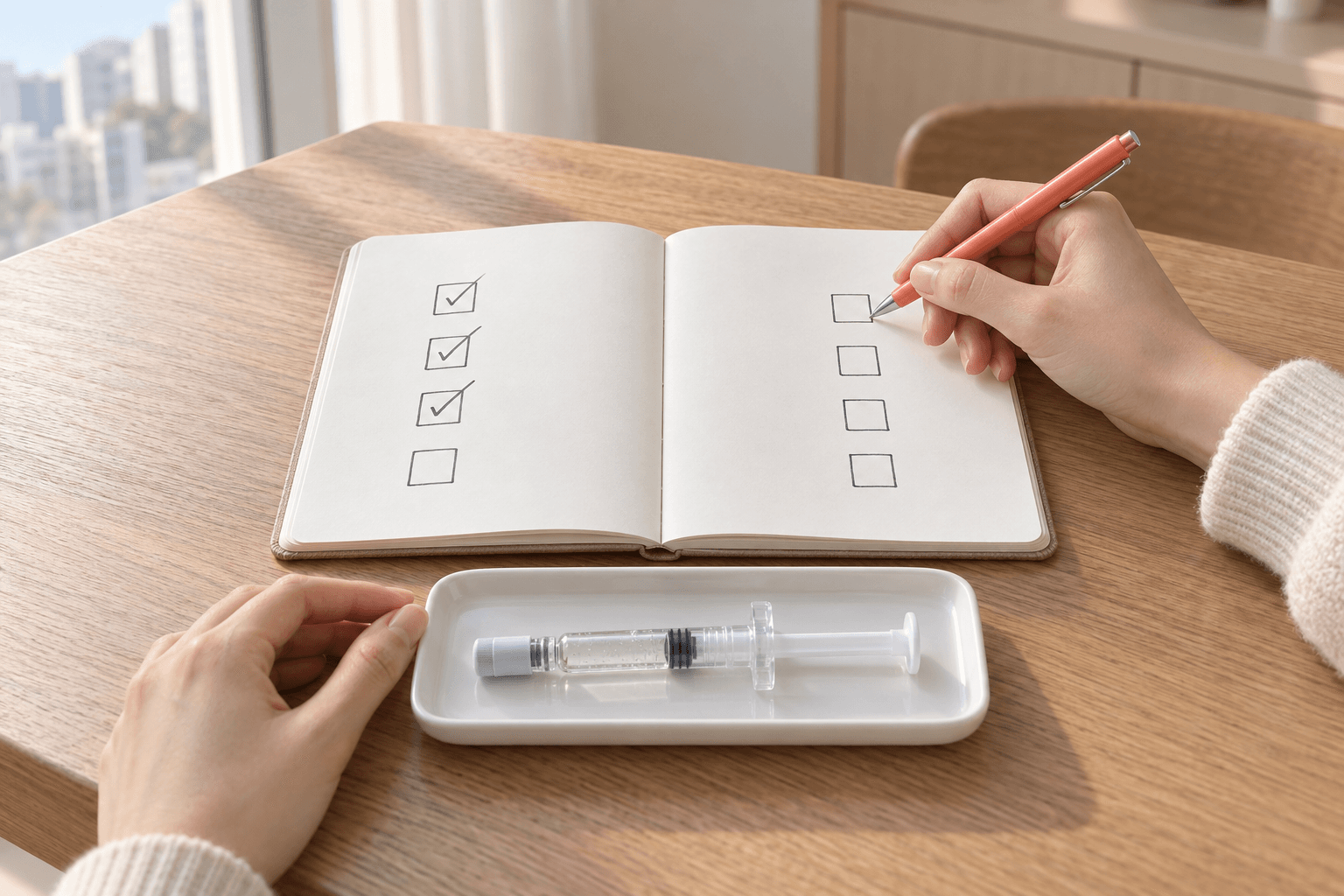
What is vaginal filler unlikely to do?
What you can expect from vaginal filler is a change in volume where it was injected; it is hard to assume that sensation or sexual satisfaction will improve along with it. Narrowing the gap between expectation and reality before the procedure is the most important preparation.
- It is not a treatment of the cause: It does not reverse changes in the supporting tissue or muscles from childbirth or aging; it adds space taken up by the material.
- There is no fixed duration: Material that the body absorbs decreases over time, and how much remains depends on the type of material, the injection site, and how your body responds. Even with the same product, people differ, so a duration is hard to promise in advance.
- The authorized scope also needs checking: Each filler product has specific authorized areas of use. Being told that a product is used on the face does not confirm its safety in the vaginal area, so ask for an explanation of the ingredients of the product to be used and the purpose for which it is authorized in Korea.
If you also have dryness, pain during sex, or urine leakage along with a loose feeling, there may be causes to look at before filler. After the cause of your discomfort is confirmed by examination, compare your options, including the choice not to have the procedure.
What should I tell the medical team before the procedure?
First, let them know whether you currently have inflammation or an infection, whether you are pregnant or breastfeeding, whether your bleeding tends to be hard to stop, and what medicines you take. Depending on this information, the procedure may be postponed or other methods may be considered.
- Infection or inflammation such as vaginitis or cystitis If there is inflammation or infection at or around the injection site, the principle is to treat it first and postpone the procedure until it has settled. If your discharge or itching is different from usual, have it checked at a visit before the procedure consultation.
- Possible pregnancy, breastfeeding, and future plans for childbirth The safety of fillers during pregnancy and breastfeeding has not been established. If you plan to have children in the future, also discuss how the procedure might affect delivery.
- A tendency to bleed and the medicines you take Medicines that make bleeding harder to stop, such as aspirin, anti-inflammatory painkillers, and warfarin, can increase bruising and bleeding. You should also mention it if you take medicines that suppress the immune system. Do not stop prescribed medicines on your own; first talk with the medical professional who prescribed them.
- Allergies and previous injections Tell them whether you have ever had a severe allergy or anaphylaxis, and whether you have reacted to a local anesthetic (such as lidocaine). If you have had filler or another material injected before, write down the timing, area, and product name as far as you remember and bring it.
If you tend to form thick scars, mention that as well. If vaginal discharge or itching keeps coming back, you may want to first read what to check in the Vaginitis care information.
What reactions are common right after the procedure?
Pain, swelling, bruising, and a little bleeding where the needle went in are common reactions, and in many cases they settle within a few days to weeks. The concern is when these reactions grow instead of easing.
Expected reactions usually appear right after the procedure and lessen over time. Separating common reactions from changes that need medical care, as below, makes it easier to judge.
| Reactions you can watch | Changes to have checked by a doctor |
|---|---|
| A dull ache or tenderness when pressed at the injection site | Pain that gets worse day by day, or pain that does not settle with rest |
| Mild swelling and a foreign-body sensation | Swelling that keeps growing, a lump that feels firm |
| Bruising or a small amount of bleeding at the needle site | Bleeding that increases or does not stop |
| Mild discomfort for the first few days | Warmth, discharge that smells or looks like pus |
On the day of the procedure, get a written record of the product name, the amount injected, and the injection site. It is essential information if you later see a doctor at another clinic or discuss additional treatment.
When is it okay to resume sex, exercise, and bathing?
There is no single date that applies to every vaginal filler; follow the guidance of the medical team who has seen the material used, the injection site, and how you are recovering. Do not use dates from other people’s reviews as your own standard.
Because the period each clinic recommends can differ, it is a good idea to ask about the items below one by one before the procedure and write down the answers.
| What you will resume | What to ask before the procedure |
|---|---|
| Sex | When it is possible, and what to do if there is pain or bleeding at first |
| Exercise | When to start light walking and when to start exercise that loads the lower body |
| Bathing, sauna, swimming | When to shower, take a soaking bath, and use a sauna or swimming pool |
| Period products | When you can use tampons or a menstrual cup |
| Washing and checking | How to wash the vulva, and whether you may touch the injection site with your fingers |
Even after the period you were given has passed, if pain or bleeding remains, hold off and contact the clinic first. Your body’s condition matters more than the date as the standard for returning to daily life.
What signs mean I should contact the clinic right away?
If pain, swelling, or bleeding gets worse instead of easing, if you have a fever, or if your discharge changes, contact the place where you had the procedure without waiting for your follow-up date. If you are short of breath or have chest pain, emergency care comes first.
Before the procedure, it helps to check whether the contact number can be reached outside clinic hours. Writing down the date symptoms began and the order in which things changed makes the visit easier.
What rare but important risks should I know about?
Infection, lumps, movement of the material, and complications caused by material entering a blood vessel are the main ones. They are not common, but when they occur treatment can take a long time, so they should be explained to you before the procedure.
- Infection: Any procedure that passes through skin and mucosa carries a risk of infection. If it occurs, antibiotic treatment or additional treatment may be needed.
- Nodules and granulomas: Firm lumps can form at the injection site, and they may appear late, weeks to years afterward. Some need treatment with injections or medicine, or surgical removal.
- Movement or leakage of the material: The injected material can move elsewhere, or leak out because of a tissue reaction or infection.
- Blood vessel–related complications: If material unintentionally enters a blood vessel, blood flow can be blocked and tissue can be damaged. Cases have also been reported in medical journals in which, after injection into the vaginal area, the material blocked blood vessels in the lungs, causing shortness of breath and leading to death. This is very rare, but it is why shortness of breath right after the procedure must not be taken lightly.
When the material needs to be reduced or removed because of side effects, the type of material also matters. Some ingredients can be reduced with a dissolving injection, but other materials may require surgery or may not be fully removable. Removal procedures carry their own risks too.
LILEAP’s Vaginal filler consultation guide also summarizes what to check about the product, previous injections, and the course after the procedure.