
One day, looking in the mirror or wearing close-fitting clothes, you may notice that your labia majora seem looser and more wrinkled than before, and it may weigh on your mind. Some people feel the change came after childbirth or a diet; others have been bothered for a long time but did not know whom to ask. This is a concern you are welcome to bring up in the consulting room.
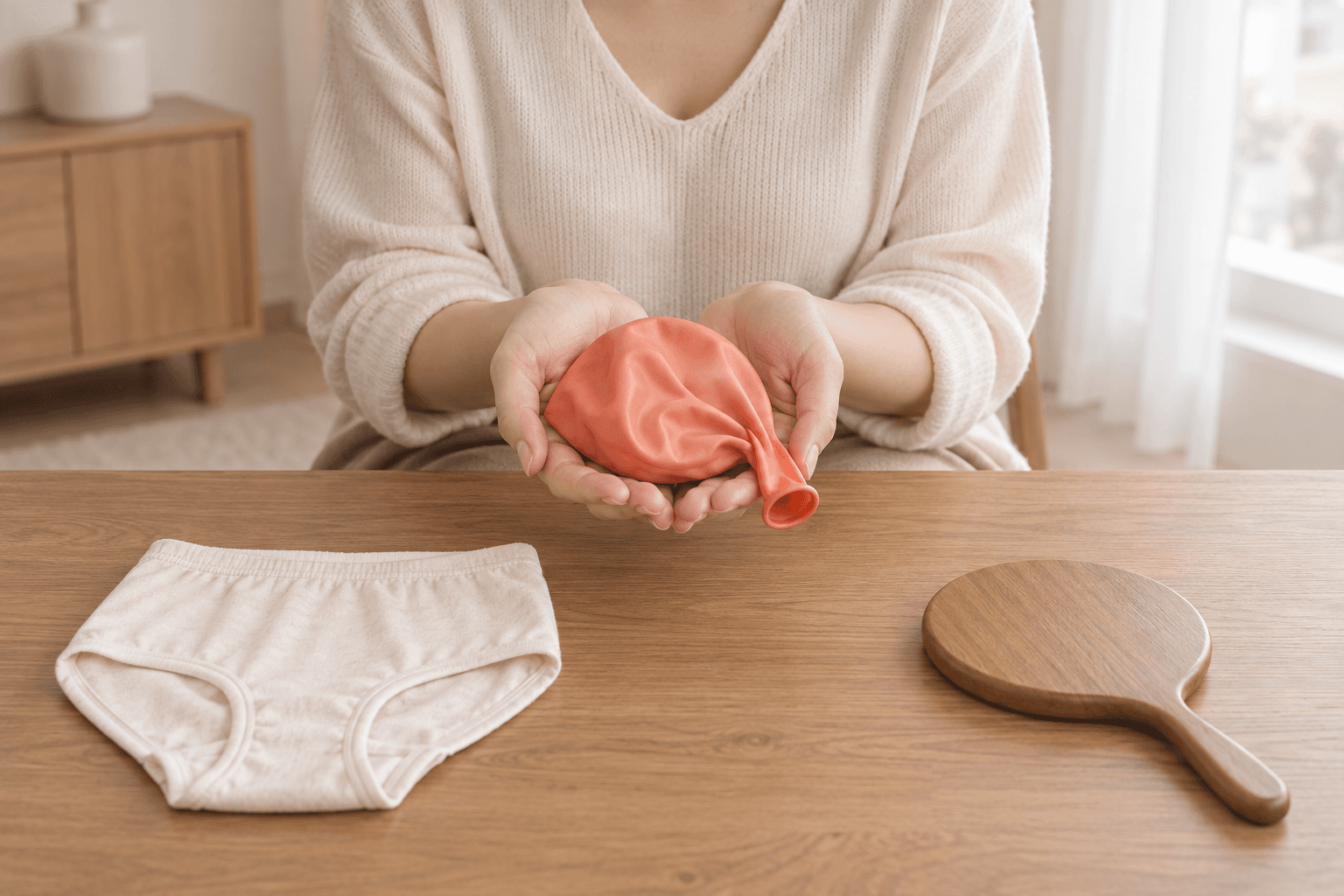
What are the labia majora supposed to look like?
There is no fixed "normal shape." The labia majora are a pair of skin folds at the outermost part of the vulva that surround the labia minora and the vaginal opening; fat and connective tissue under the skin give them their full shape.
Some people have a lot of volume, while others have flatter labia with many wrinkles. Exact left–right symmetry is actually rare, and it is also common for the labia minora to show outside the labia majora. After hair removal, folds and contours that were hidden by hair can be seen at a glance, so it may feel as though things have suddenly changed.
What you see in advertisements or retouched photos does not represent the real variety of vulvas. If you compare yourself against other people's photos, even normal differences can easily look like a problem.
Why might they look saggy or wrinkled?
Hormonal changes with age, changes in weight, and pregnancy and childbirth are typical backgrounds, and the shape you were born with also plays a large part. Often several of these overlap rather than just one.
- Age and menopause: As estrogen falls after menopause, the vulvar skin can become drier and less elastic, and hair may also thin.
- Weight changes: The labia majora contain a lot of fat, so if you lose a lot of weight over a short period, the volume can decrease and leave extra skin that looks wrinkled.
- Pregnancy and childbirth: During pregnancy, increased blood flow can make the labia look swollen and darker. After childbirth most return close to how they looked before, but some changes may remain, and if there was a tear, one side may look different.
- Repeated pressure and friction: Activities with prolonged pressure, such as cycling, or tight clothing are sometimes mentioned together with changes in shape.
Sex or masturbation does not permanently change the size or shape of the labia. In other words, you cannot guess someone's sex life from their shape.
How can I separate discomfort from concerns about appearance?
Try writing down "what is uncomfortable" and "what aspect of the appearance bothers me" separately. Both are concerns you can discuss, but what needs checking and what change you can expect are different.
| Type of concern | Example | What to look at together in the consultation |
|---|---|---|
| Chafing and raw skin | Folded skin rubs and stings when walking or exercising | How it relates to clothing and activity, and whether dermatitis or an infection is also present |
| Moisture and hygiene | The area between the folds always feels damp and odor is a concern | Washing habits and other causes such as itching or changes in discharge |
| How it looks in clothes | The outline shows through close-fitting clothes and it bothers you | Whether there is excess skin or a lot of volume |
| The shape itself | The saggy, wrinkled look or a left–right difference bothers you | What change you specifically want, and differences that may remain |
If hygiene or odor is your concern, it is better not to expect that changing the shape alone will solve it. Evidence is lacking that vulvar cosmetic surgery improves hygiene or reduces vaginitis, and repeated itching or raw, irritated skin may be caused by a skin condition or an infection.
Concerns about appearance can be discussed fully, too. However, if you find yourself checking many times a day, or the worry leads you to avoid intimacy or daily activities, it is a good idea to address that emotional burden with your medical team before deciding on surgery.
How are the choice not to have surgery and labia majora surgery divided?
First, an examination distinguishes whether excess skin is causing sagging, whether a large amount of fat is causing bulk, or whether volume has been lost. Even the same "sagging" can call for different options depending on the cause, and not having surgery is one of them.
| Option | Considered for | Points to know in advance |
|---|---|---|
| Care and observation without surgery | When the discomfort is not severe, or irritation or skin problems come first | Irritation is reduced and skin problems that need treatment are dealt with first. It is fine to decide against surgery after hearing the explanation |
| Surgery to reduce lax tissue | When excess skin makes the labia look saggy and wrinkled, or a large volume causes discomfort | Excess skin is excised or the amount of fat is adjusted. Check the extent of excision, the suture position and where the scar will lie in advance |
| Treatment to supplement volume | When lost volume, rather than skin, is the main concern | Its purpose differs from reduction surgery, and it is not a required step of surgery. Advantages, disadvantages and risks differ by material and method |
If you choose not to have surgery, wash the outer area gently with lukewarm water instead of scented cleansers, change clothing that rubs, and see how the discomfort changes. If only volume is added when excess skin is causing the sagging, or only skin is reduced when the problem is excess bulk, the result may differ from what you expected. If both methods are recommended together, ask for a separate explanation of why each is needed.
When is labia majora surgery not a good fit, and what are its risks and limits?
Surgery can change the shape, but it does not guarantee the result or sensation, and tissue that has been reduced too much is difficult to restore. You need to weigh the change you expect against the risks you would accept, side by side.
In cases like the following, it is better not to rush into surgery.
- When there is a problem to treat first, such as itching, inflammation or a skin condition
- When the look you want is from someone else's photo, or a perfectly symmetrical shape
- When you plan a large change in weight in the near future, so the volume may change again
- When you are rushing the decision because of others' suggestions or anxiety
Recovery time depends on the extent of surgery and how healing progresses, so it is hard to state a recovery time in advance. Ask separately when you can return to work, exercise and sexual activity, and before surgery, organize how to care for the wound and whom to contact if a problem arises. If pain or bleeding gets steadily worse, do not wait for your next appointment; contact the medical institution where you had surgery.
What should I say and ask first at a consultation?
Tell us about the one situation that bothers you most, together with what you want to change and what you want to keep. You do not need to decide on a surgical method in advance.
- The moments when discomfort occurs Note which clothes or activities cause rubbing, and whether stinging or itching comes with it.
- When it changed and any previous treatment Tell us when you felt it began to change, such as after childbirth, a change in weight or menopause, and whether you have had any previous surgery or injection procedures.
- The extent of the change you want Describing separately the parts you want to reduce and the parts you want to leave as they are makes planning easier.
- Current medicines and health conditions Medicines you take, allergies and underlying conditions affect anesthesia and recovery planning.
LILEAP's labia majora surgery guide explains what is distinguished at a consultation and what to know after surgery, and the labia majora volume treatment guide covers what to check when supplementing volume. If the rubbing mainly comes from the labia minora, see what to look at when the labia minora chafe and feel uncomfortable; if color is your concern, also read vulvar color changes and what to check before brightening.